
Cardiac Catheterization for Adults
Cardiac Catheterization for Adults
A Minimally Invasive Procedure to Check Arteries or Treat Blocked Vessels
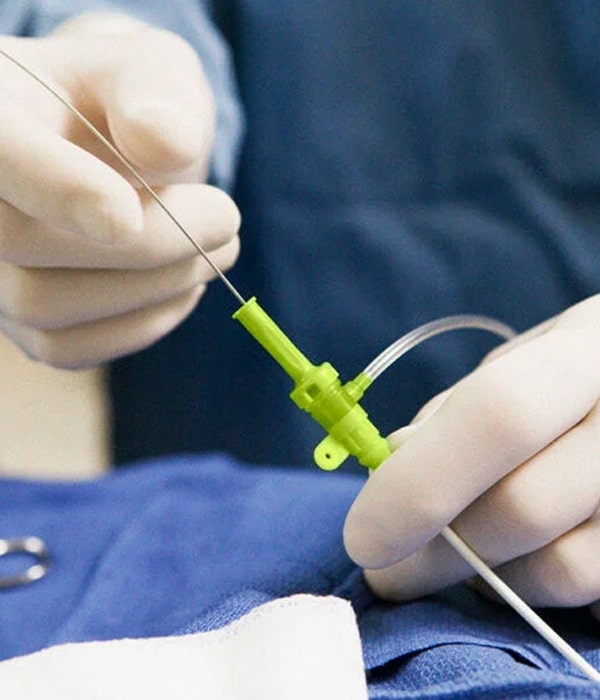
At KidsHeart Medical Center, we refer patients for Cardiac Catheterization when a detailed view of the heart’s arteries or a direct treatment for a blockage is needed.
This procedure helps diagnose and manage coronary artery disease, heart valve issues, and other structural heart problems, often without open-heart surgery.
We work with leading cardiac centers across Dubai, Abu Dhabi, and Al Ain to offer safe, well-coordinated catheter-based diagnostics and treatments as part of our Adult Cardiology Services.
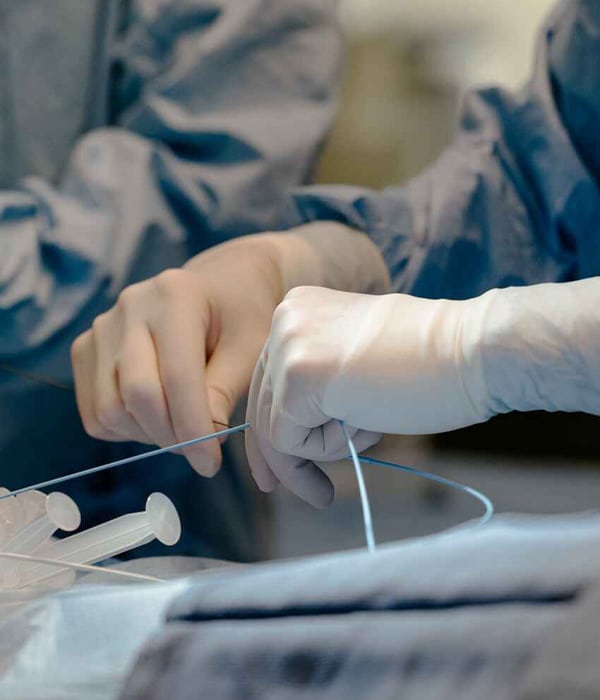
The Gold Standard for Diagnosing Blocked Heart Arteries
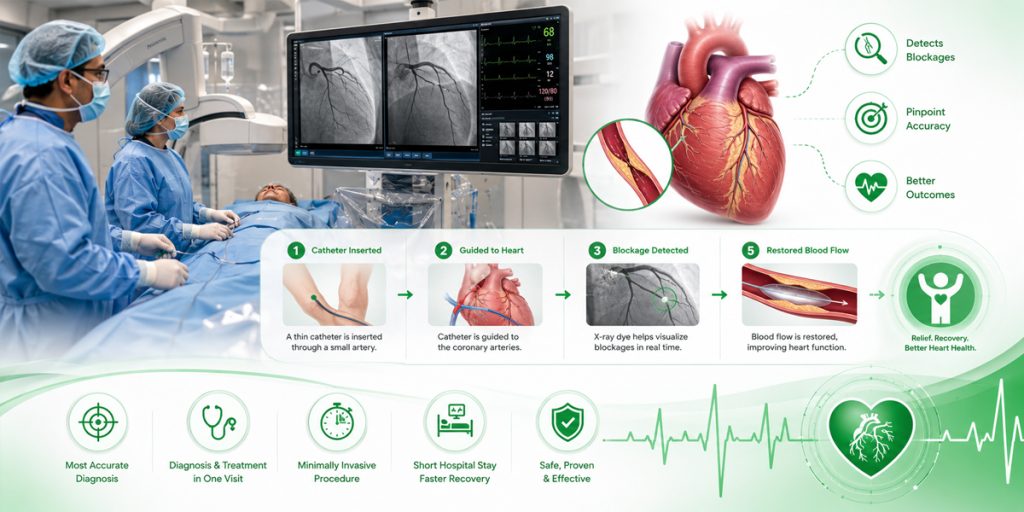
Cardiac catheterization is the most precise way to see inside your coronary arteries and identify blockages that may be causing chest pain, breathlessness, or reduced heart function. It can also fix a blockage in the same procedure — meaning diagnosis and treatment often happen in one visit.
Minimally Invasive, Not the Open Surgery It Used to Be
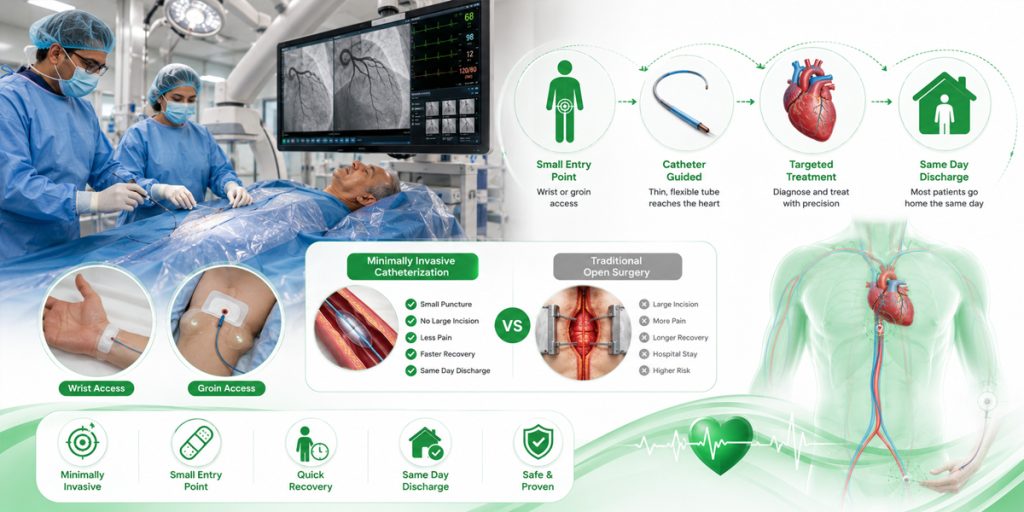
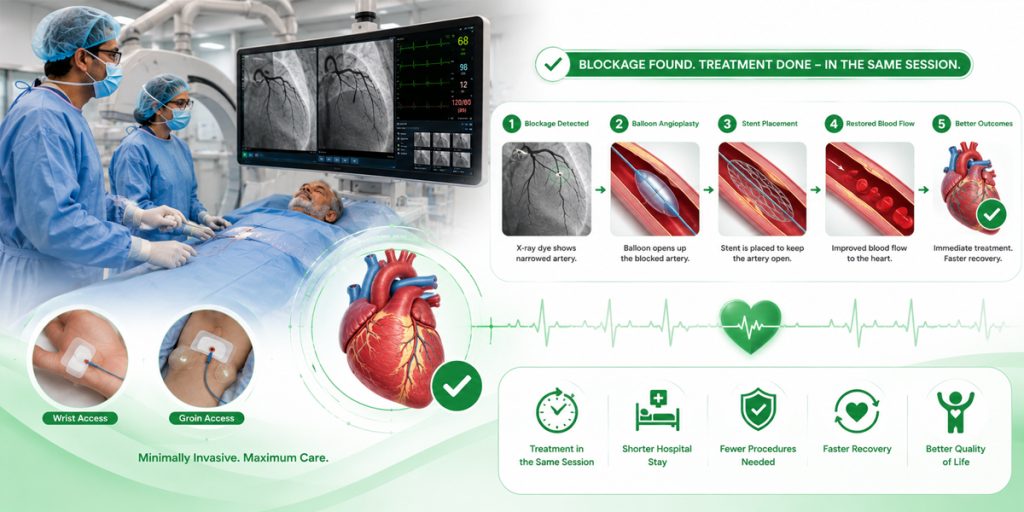
A thin, flexible tube (catheter) is guided through a small entry point in your wrist or groin to reach your heart. There are no large incisions, and most patients go home the same day. It’s a procedure that sounds more daunting than it is.
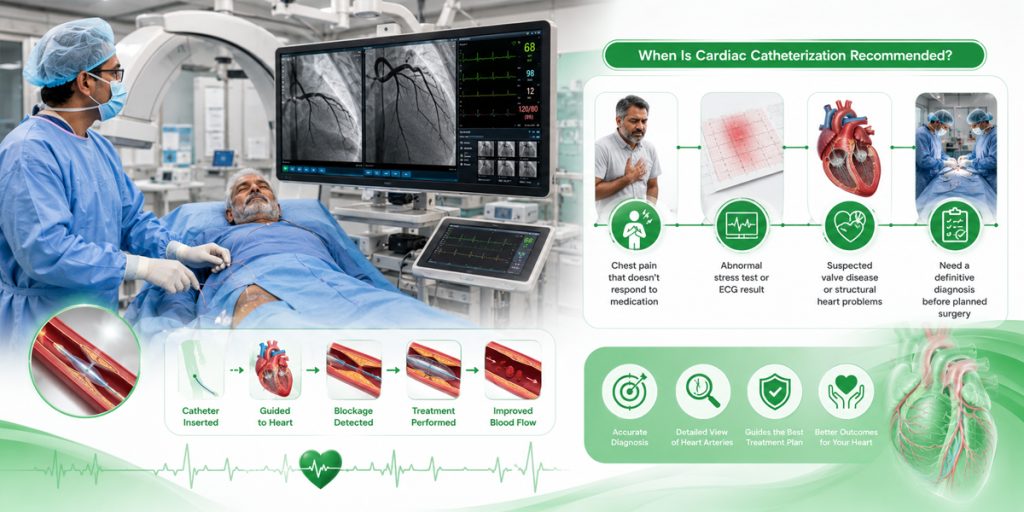
When Is Cardiac Catheterization Recommended?
Your cardiologist may recommend catheterization if you have chest pain that doesn’t respond to medication, an abnormal stress test or ECG result, suspected valve disease or structural heart problems, or if you need a definitive diagnosis before planned surgery.
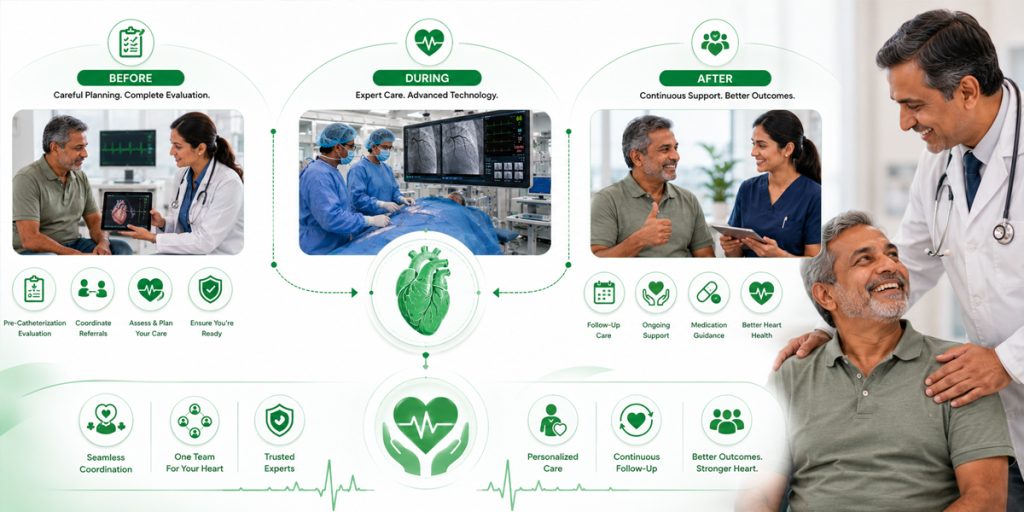
We Stay With You Before, During, and After
KidsHeart manages your pre-catheterization evaluation, coordinates your referral to an interventional cardiology team, and provides all your follow-up care after the procedure. You won’t be navigating the process alone — we keep your care continuous and connected.

Cardiac Catheterization Support in Dubai, Abu Dhabi, and Al Ain
KidsHeart coordinates catheterization with leading interventional cardiac centers across all three UAE cities. Whether you’re in Dubai, Abu Dhabi, or Al Ain, we ensure you’re seen at the right facility with the right team — and that we’re in the loop throughout.
If a Blockage Is Found, Treatment Can Often Happen Right Away
One of the key advantages of catheterization is that if a blockage is detected, balloon angioplasty and stent placement can usually be performed in the same session. This saves time, reduces the need for additional procedures, and gets you on the path to recovery faster.
What is Cardiac Catheterization?
Cardiac Catheterization is a procedure in which a thin, flexible tube (catheter) is inserted through a blood vessel (usually in the wrist or groin) and guided to the heart.
Contrast dye is injected, and X-ray images are taken to:
- Check for blockages in the coronary arteries
- Measure blood pressure and oxygen levels inside the heart chambers
- Evaluate valve function
- Detect congenital or acquired structural heart defects
- Perform angioplasty or stent placement, if needed
This is considered the gold-standard test for diagnosing coronary artery disease.
When is Cardiac Catheterization Recommended?
You may be referred for cardiac catheterization if you:
- Have chest pain (angina), especially if worsening or unresponsive to medication
- Have abnormal stress test or ECG results
- Have symptoms of shortness of breath, fatigue, or reduced heart function
- Are being evaluated for valve disease, heart failure, or congenital heart conditions
- Require confirmation of diagnosis before heart surgery or intervention
It may be both diagnostic and therapeutic — identifying a problem and fixing it during the same procedure.
What Happens During the Procedure?
Cardiac catheterization is usually performed in a hospital’s cath lab and involves:
- Preparation: You may be asked to fast. Blood tests and imaging may be done beforehand.
- Local anesthesia: A small area on your wrist or groin is numbed.
- Catheter insertion: A thin tube is threaded through your artery into the heart.
- Dye injection & imaging: X-ray dye is used to visualize arteries and heart structures.
- Treatment (if needed): Balloon angioplasty or stent placement can be performed immediately if blockages are found.
Most procedures last 30–60 minutes and do not require general anesthesia.
Why Choose KidsHeart?
- Evaluations and referrals coordinated by our Adult Cardiologists
- Pre- and post-procedure planning, counseling, and risk assessment
- Access to leading interventional cardiology teams in Dubai, Abu Dhabi, and Al Ain
- Follow-up care, medication adjustment, and long-term monitoring
- Seamless care across diagnosis, treatment, and recovery
We stay involved before, during, and after your catheterization — so your care remains continuous and personalized.
Accurate Diagnosis. Immediate Action.
At KidsHeart, we ensure that adults receive expert referrals, clear guidance, and coordinated care before and after cardiac catheterization.
We proudly support patients undergoing this procedure in Major Cities like Dubai, Abu Dhabi, and Al Ain.
Frequently Asked Questions (FAQs)
No. The procedure is done under local anesthesia, and most patients feel only mild pressure or warmth from the dye.
Most patients are monitored for a few hours and return home the same day, depending on the access site and procedure complexity.
Like any procedure, there are risks such as bleeding or allergic reactions to the dye, but serious complications are rare.
Catheterization is the diagnostic process. If a blockage is found, angioplasty (with or without stent placement) can be done during the same session.
In most cases, the cardiologist will review the results immediately after the procedure and discuss next steps with you.