
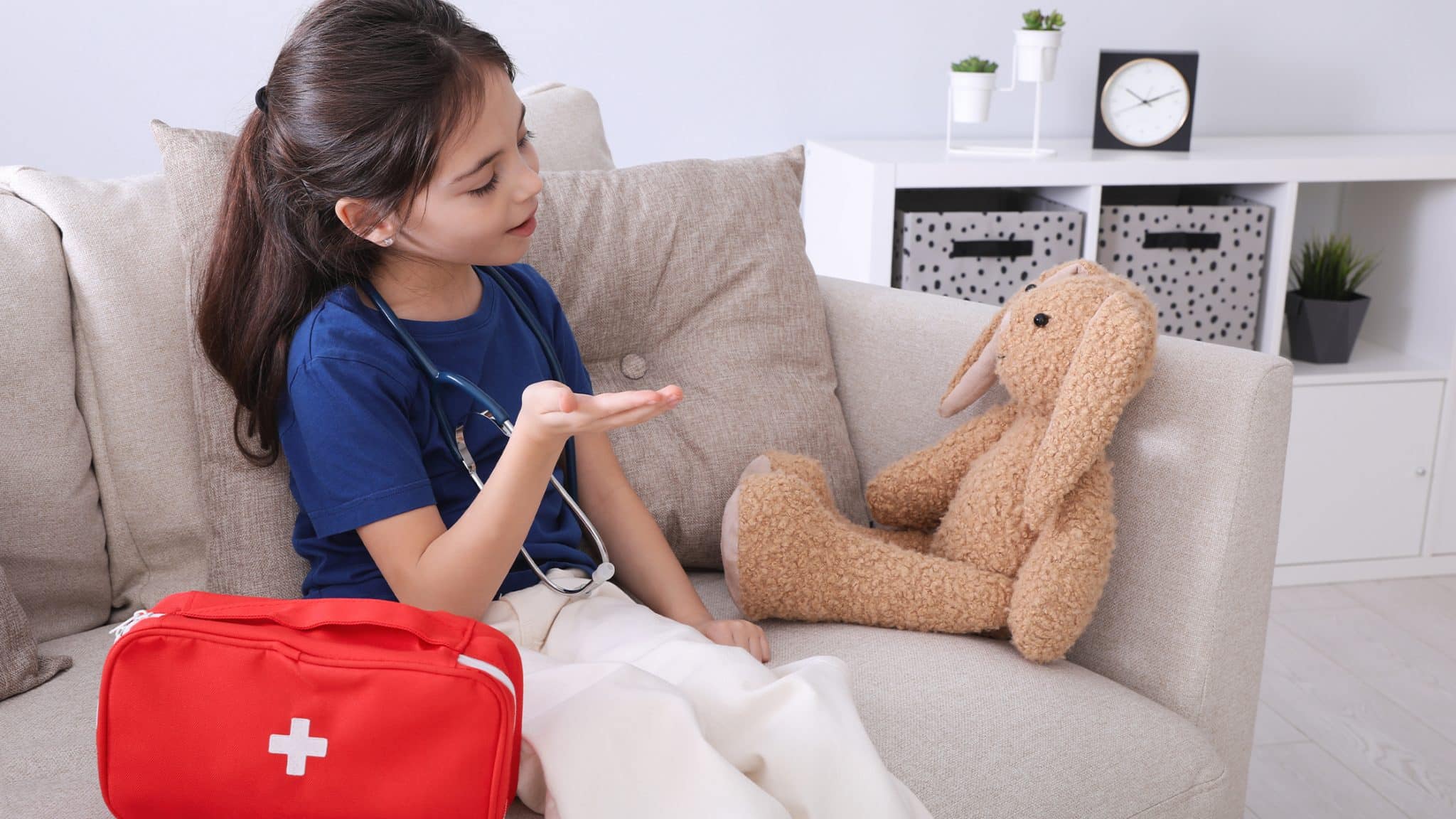
Scraped knees, minor burns, or sudden fevers — children’s accidents can happen anytime, anywhere. Whether it’s a tumble on the playground or a kitchen mishap, quick, confident first aid can make a world of difference in how your child recovers.
In the UAE, where families often live in multi-level homes or high-rise apartments, having basic first aid knowledge isn’t just helpful — it’s essential.
At KidsHeart Medical Center, our pediatric injury prevention and first aid counseling specialists teach parents how to handle common childhood emergencies with calm, effective care until professional help arrives.
Why Every Parent Needs Basic First Aid Skills
Children are naturally curious and active. They run, climb, explore, and sometimes get hurt — often in seconds. Knowing what to do in those crucial first moments can prevent minor injuries from becoming serious and can even save a life.
Research from the Dubai Health Authority (DHA) shows that over 40% of childhood injuries treated in UAE emergency rooms occur at home — most involving falls, burns, or choking. Quick, appropriate first aid can reduce complications and speed up recovery.
Common Childhood Emergencies — and How to Respond
Here are the situations every parent should be ready for, along with simple, evidence-based responses:
- Cuts and Scrapes
- Wash your hands and clean the wound gently with water.
- Stop bleeding with gentle pressure using a clean cloth or sterile gauze.
- Apply antiseptic and cover with a bandage.
- See a doctor if the wound is deep, gaping, or caused by a dirty object.
- Burns and Scalds
- Immediately cool the area with cool (not ice-cold) running water for 10–20 minutes.
- Do not apply toothpaste, butter, or ice — these can worsen the injury.
- Cover with a clean, non-stick dressing.
- Seek medical help for large or blistered burns, especially on the face or joints.
- Choking
- For children over one year: encourage coughing first.
- If the object doesn’t clear, perform back blows and chest thrusts (learned in a certified first aid class).
- For infants under one: give five back blows followed by five chest compressions.
- Call emergency services if your child can’t breathe or turns blue.
Our treatment for common childhood illnesses team often emphasizes that learning the choking maneuver in advance can be life-saving.
- Head Bumps and Falls
- If your child cries immediately and seems alert, it’s usually minor.
- Apply a cold compress for 10 minutes to reduce swelling.
- Observe closely for 24 hours — watch for vomiting, drowsiness, confusion, or imbalance.
- Go to the ER immediately if your child loses consciousness, vomits repeatedly, or behaves unusually.
- Nosebleeds
- Sit your child upright and tilt their head slightly forward (not back).
- Pinch the soft part of the nose for 10 minutes without stopping to check.
- Apply gentle pressure and avoid inserting tissues or objects.
- Seek help if the bleeding lasts more than 15 minutes or happens frequently.
- Insect Bites or Stings
- Remove the stinger if visible using tweezers.
- Wash the area and apply a cold compress to reduce swelling.
- Use antihistamine cream for itching (if prescribed).
- Seek urgent care if your child develops swelling of the face, lips, or difficulty breathing — these may indicate an allergic reaction.
Building a Home First Aid Kit
Every UAE household should have a well-stocked, child-safe first aid kit, ideally stored in a cool, dry place. Include:
- Adhesive bandages in various sizes
- Sterile gauze and tape
- Antiseptic wipes or cream
- Digital thermometer
- Tweezers and small scissors
- Fever and pain relief medication (paracetamol or ibuprofen)
- Saline solution for eye or wound rinsing
- Burn gel or cream
- Oral rehydration salts
- Emergency contact numbers
Check expiry dates regularly and restock as needed.
Safety First: Preventing Common Injuries
While accidents can’t always be avoided, many are preventable. A few proactive habits go a long way:
- Keep cleaning products and medicines out of reach.
- Use safety gates and window locks in high-rise apartments.
- Never leave children unattended in bathtubs or near water.
- Teach older children basic safety rules about hot surfaces, sharp tools, and crossing streets.
- Secure furniture to walls to prevent tipping.
Our general pediatrics team also offers seasonal safety tips — such as preventing heat-related illness and ensuring hydration during UAE’s hot months.
The UAE Context: Quick Access to Help
In the UAE, emergency medical services are highly responsive, but knowing the right number can save precious seconds.
- 998 — National Ambulance (UAE)
- 999 — Police or emergency operator for medical help
If you live in a large residential complex or gated community, note your nearest clinic or hospital on the fridge or phone for easy reference.
Did You Know?
According to UAE pediatric safety studies, nearly 70% of parents feel unsure about how to handle choking or burns during emergencies — yet more than half said they’d like to attend a first aid course. Basic training empowers parents to respond quickly and confidently, often preventing serious complications.
Prepared, Calm, and Confident
First aid isn’t about perfection — it’s about staying calm, protecting your child, and acting with confidence until medical help arrives. A few minutes of knowledge can make all the difference when the unexpected happens.
At KidsHeart Medical Center, our Western-trained pediatricians in Dubai, Abu Dhabi, and Al Ain offer first aid counseling and injury prevention education for families. If you’d like to learn essential first aid skills or prepare your home safety plan, you can easily book an appointment with our pediatric specialists at KidsHeart Medical Center.