
Bath time is when it usually turns up. A mother in Al Ain lifts her son’s shirt after a family gathering that ran long into the afternoon heat, and there it is: a cluster of tiny red bumps across his neck and shoulders, the skin slightly raised and warm to the touch. He’d been dressed nicely for photos, bundled a little more than usual, and outside far longer than planned. He hadn’t seemed uncomfortable at the time. Now, freshly bathed, he can’t stop scratching.
Heat rash is one of the most common reasons families across the UAE end up in a dermatologist’s office during the summer months, and it’s rarely anything serious. It is, however, worth understanding properly, both to treat it and to tell it apart from the handful of other summer skin reactions that can look similar at first glance. KidsHeart’s Sun Protection Counselling and Skin Cancer Prevention service, based at the Al Ain clinic, exists specifically to help families build habits that prevent this cluster of summer skin issues before they start.
What’s Actually Happening Under the Skin
Heat rash, medically called miliaria and often nicknamed prickly heat, happens when sweat becomes trapped beneath the skin instead of evaporating off the surface. The sweat ducts, particularly in young children, are still narrow and not yet fully efficient, and heavy heat combined with tight or heavy clothing can block them further. The trapped sweat leaks into the surrounding skin, producing the small red or clear bumps that show up most often in skin folds, under diapers, and anywhere clothing sits snugly against the body.
It looks uncomfortable, and often is, but it’s a mechanical blockage problem rather than an infection or allergic reaction. Cooling the skin down and letting the ducts clear typically resolves it within a day or two without any medication at all.
Why Infants Are Especially Prone to It
A baby’s sweat glands are still maturing, which makes heat rash disproportionately common in the first year or two of life compared to later childhood. Add to that the tendency to dress infants in more layers than the weather calls for, whether for warmth out of habit, sun coverage, or simply how photogenic a full outfit looks at a family event, and the combination sets up exactly the conditions heat rash needs.
None of this means infants should be dressed minimally in Gulf heat. It means the balance matters: light, breathable fabric that still covers the skin from direct sun tends to prevent both heat rash and sunburn at once, which is a better trade than solving one problem by creating the other.
Heat Rash, Sunburn, and Sun Allergy Aren’t the Same Thing
Parents often bring in a rash assuming it’s one of these three interchangeably, and the treatment for each is different enough that telling them apart matters:
- Heat rash appears in covered, sweaty areas like the neck, underarms, and diaper region, not necessarily anywhere the sun actually touched
- Sunburn appears specifically on skin that was exposed to direct sunlight, and shows up as redness, warmth, and tenderness rather than small bumps
- Sun allergy, medically called polymorphic light eruption, produces an itchy rash on sun-exposed skin, often appearing hours after exposure rather than immediately
- Fever, blistering, or a rash that spreads beyond sun-exposed or sweat-prone areas points away from all three and warrants an actual evaluation
Getting the category right changes what actually helps. Cooling and loose clothing resolve heat rash. Aloe and shade help sunburn heal. A true sun allergy sometimes needs a dermatologist’s involvement to manage properly rather than home care alone.
The Statistic Behind Why This Gets Taken Seriously
Heat-related skin issues aren’t a minor seasonal inconvenience in aggregate. According to the American Academy of Pediatrics, cited by Miller Children’s & Women’s Hospital, infants and young children account for nearly half of all heat-related illness cases in the United States, and emergency department visits for these conditions have climbed sharply over the past decade. Heat rash itself is rarely an emergency, but it’s part of a broader pattern of how much heat exposure affects the youngest skin, which is exactly why prevention gets more attention than treatment in most dermatology guidance.
Building Sun Protection Into an Al Ain Summer
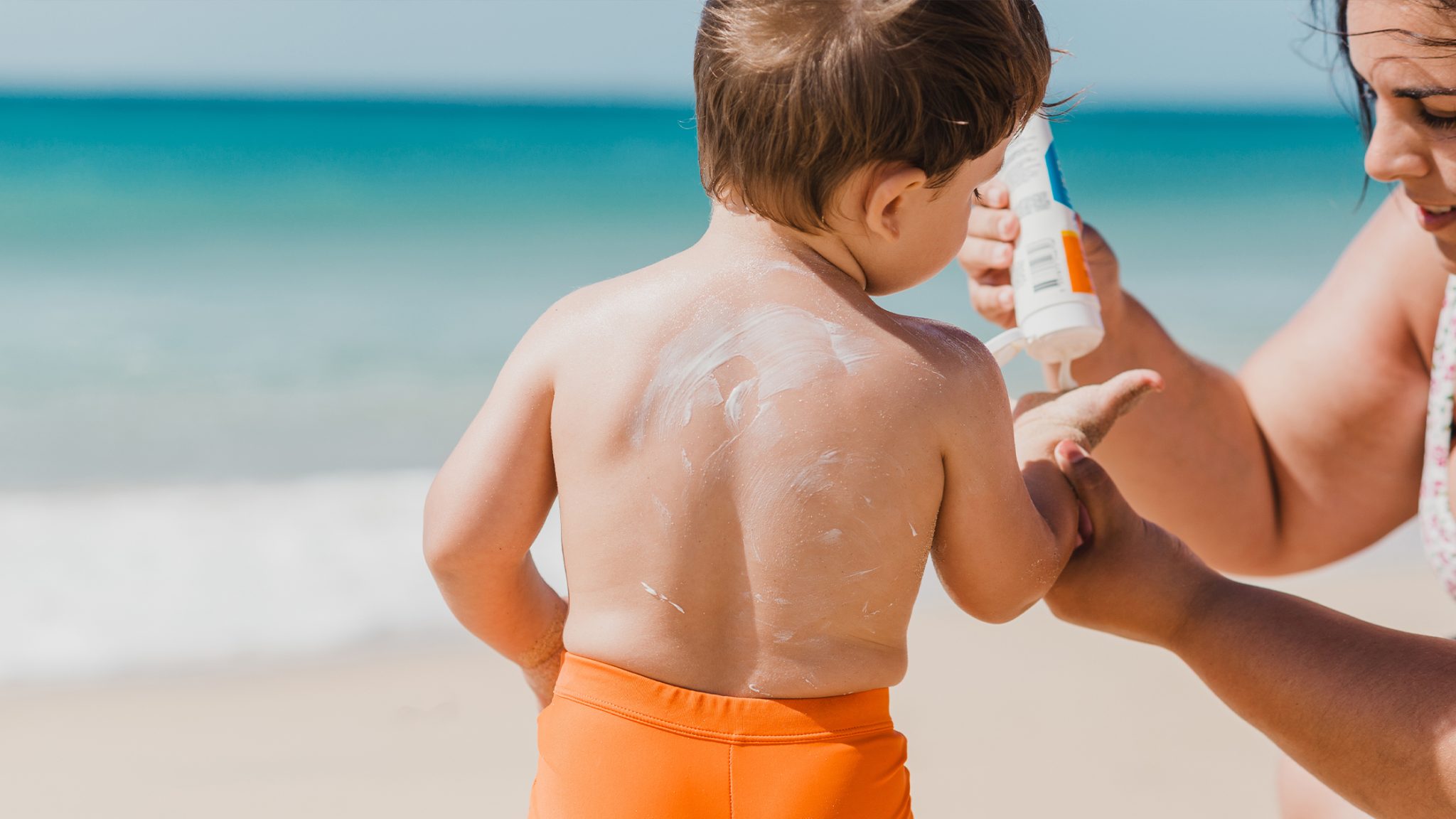
Most of this comes down to habits repeated consistently rather than any single product. A broad-spectrum sunscreen of at least SPF 30, reapplied roughly every two hours and immediately after swimming, covers the basics. Lightweight, breathable, tightly woven fabric protects skin from sun exposure without trapping heat the way thicker clothing can. Shade during the hottest stretch of the day, generally late morning through mid-afternoon, does more to prevent both sunburn and heat rash than sunscreen alone.
For families in Abu Dhabi managing the same summer conditions, the same principles apply regardless of which KidsHeart clinic a family visits. Building these habits early, rather than reacting to a rash after it appears, is the entire premise behind a proper sun protection counselling visit, and it pairs naturally with the kind of daily skin care routine guidance KidsHeart’s Al Ain dermatology team already provides for sensitive or at-risk skin.
When a Rash Needs a Dermatologist’s Eye
Most heat rash clears on its own with cooler air, looser clothing, and a day or two of patience. A rash that spreads, blisters, develops pus, or comes with a fever has moved past ordinary heat rash into something worth an actual exam. Recurrent heat rash in the same spots, or a baby who seems to react to heat far more severely than expected, is also worth a proper look rather than repeated home treatment, since KidsHeart’s neonatal dermatology consultations in Al Ain exist precisely for the more delicate judgment calls that come with infant skin.
That evening at bath time, the bumps across his shoulders turned out to be exactly what they looked like: ordinary heat rash from a long, overdressed afternoon outside. A cooler bath, lighter pajamas, and a fan in the room were enough. For the rashes that don’t resolve that easily, the next step is booking an appointment with the Al Ain dermatology team before a home remedy turns into weeks of guessing.
