


Sudden Cardiac Death Risk Assessment for Children
Identifying and Managing Hidden Cardiac Risks Early
At KidsHeart Medical Center, we understand that preventing rare but serious heart events starts with early, careful evaluation.
Our Sudden Cardiac Death (SCD) Risk Assessment program identifies children at risk due to family history, unexplained fainting, or underlying heart abnormalities, ensuring proactive care before problems arise.
Our assessments are fully coordinated with our broader Pediatric Cardiology Services for complete and specialized follow-up if needed.
Sudden Cardiac Death in Children Is Rare, But Early Assessment Can Prevent It
In most cases where a young person suffers a sudden cardiac event, there were risk factors that could have been identified beforehand. A proactive risk assessment gives families the chance to find those risks and act on them before anything happens.
A Family History of Sudden Cardiac Death Is One of the Clearest Reasons to Get Assessed
If a close family member died suddenly from a heart event — especially under the age of 50 — or if inherited conditions like hypertrophic cardiomyopathy or Long QT Syndrome run in your family, your child should be evaluated regardless of whether they have symptoms.
Don't Dismiss Symptoms Like Fainting or Palpitations During Exercise as Just Tiredness
These are exactly the kinds of symptoms that warrant a closer look. Fainting during physical activity, chest pain with exertion, or dizziness without an obvious cause are among the warning signs our team specifically evaluates in this assessment.
The Assessment Covers Family History, Physical Exam, ECG, and More
We conduct a thorough personal and family history review, a physical examination looking for subtle signs of inherited conditions, an ECG, and an echocardiogram. Holter monitoring, exercise stress testing, or genetic counseling are added when the findings call for it.
Even If All Tests Come Back Normal, You Won't Leave Without a Clear Plan
A normal result is genuinely reassuring — and we explain exactly why. Where follow-up is still recommended based on history or symptoms, we tell you how often and what to watch for, so nothing is left uncertain.
If a Risk Is Found, Effective Treatments Are Available
Depending on the findings, management may include medication, activity adjustments, lifestyle guidance, or in certain cases, an implantable defibrillator. The goal is always to keep your child as active and safe as possible — not to restrict their life unnecessarily.
Why Is Risk Assessment Important?
Although sudden cardiac death in children and adolescents is rare, when it happens, it is devastating — and in many cases, early detection could have made a difference.
Early risk assessment helps:
- Identify silent heart abnormalities
- Protect children engaging in sports or physical activities
- Provide life-saving interventions when needed
- Give families peace of mind
Knowing your child’s risk — and taking action if necessary — can prevent tragedy and ensure a healthier future.
Who Should Undergo SCD Risk Assessment?
We recommend evaluation for children and teens who have:
- A family history of sudden cardiac death at a young age (under 50 years)
- A family history of inherited cardiac conditions (e.g., hypertrophic cardiomyopathy, long QT syndrome)
- Personal history of fainting (syncope), especially during exercise or emotional stress
- Symptoms such as chest pain, palpitations, dizziness, or shortness of breath during activity
- Known congenital or acquired heart abnormalities
- Abnormal findings during school or sports physicals
Even if symptoms are mild or infrequent, careful evaluation matters.
What the Risk Assessment Includes
At KidsHeart, our SCD Risk Assessment typically involves:
- Detailed personal and family history review focused on cardiac events and symptoms
- Physical examination to detect murmurs, pulse abnormalities, or physical signs of inherited conditions
- Electrocardiogram (ECG) to assess heart rhythm and electrical patterns
- Echocardiogram (heart ultrasound) to evaluate structure and function
- Holter monitoring if intermittent symptoms or arrhythmias are suspected
- Exercise stress testing in selected cases
If needed, we also coordinate genetic counseling and testing for families with hereditary conditions.
Why Choose KidsHeart?
- Evaluations led by Pediatric Cardiologists experienced in inherited and acquired cardiac conditions
- Comprehensive risk stratification and customized follow-up plans
- Access to all cardiac diagnostic tools under one roof
- Coordination with genetic specialists when necessary
- Located in Major Cities like Dubai, Abu Dhabi, and Al Ain — ensuring families have timely access to expert care
We are committed to proactive prevention, not just reaction.
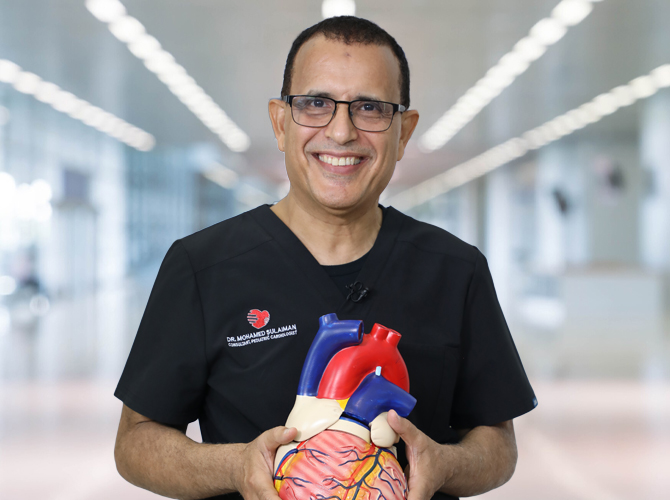
Dr. Mohamed Sulaiman
Consultant, Fetal & Pediatric Cardiologist – American Board Assistant professor, Columbia University, New York
Knowledge is Power — Protecting Young Hearts
At KidsHeart, we help families move from fear to confidence — by carefully assessing cardiac risk and taking action when needed.
We proudly offer Sudden Cardiac Death Risk Assessments in Major Cities like Dubai, Abu Dhabi, and Al Ain.
Frequently Asked Questions (FAQs)
Fortunately, it is rare. However, when it occurs, early detection of risk factors could have often prevented the event.
Not always. Most fainting in children is benign, but fainting during exercise or without warning requires evaluation.
You’ll receive reassurance and guidance. In some cases, follow-up may still be recommended depending on history and symptoms.
Yes. Many inherited conditions can be detected or suspected through screening tests and confirmed with genetic studies if needed.
Yes. Treatments can include medications, lifestyle modifications, activity adjustments, or in some cases, devices like implantable defibrillators (ICDs).