Holter Monitor & 24-Hour Ambulatory BP Monitoring

Holter Monitor & 24-Hour Ambulatory BP Monitoring

Portable Devices That Track Heart Rhythm and Blood Pressure Over Time
Holter Monitor 24-Hour Ambulatory BP Monitoring Adult Cardiology Dubai Al Ain Abu Dhabi

At KidsHeart Medical Center, we use Holter Monitors and 24-Hour Ambulatory Blood Pressure Monitoring (ABPM) to detect heart rhythm disturbances and blood pressure variations that may not be captured during a routine clinic visit.

These compact, wearable devices offer a detailed view of your cardiovascular health in real-world settings, while you go about your daily routine.
We provide these services across Dubai, Abu Dhabi, and Al Ain, as part of our broader Adult Cardiology Services.

Holter Monitor 24-Hour Ambulatory BP Monitoring Adult Cardiology Dubai Al Ain Abu Dhabi
Holter Monitor & 24-Hour Ambulatory BP Monitoring Adult Cardiology Dubai Al Ain Abu Dhabi

Some Heart Issues Only Show Up When You're Living Your Life

A single ECG or blood pressure reading in the clinic captures just one moment. Holter monitors and 24-hour ambulatory blood pressure cuffs track your heart rhythm and blood pressure over an entire day and night — catching what a snapshot can’t.

What Is a Holter Monitor?

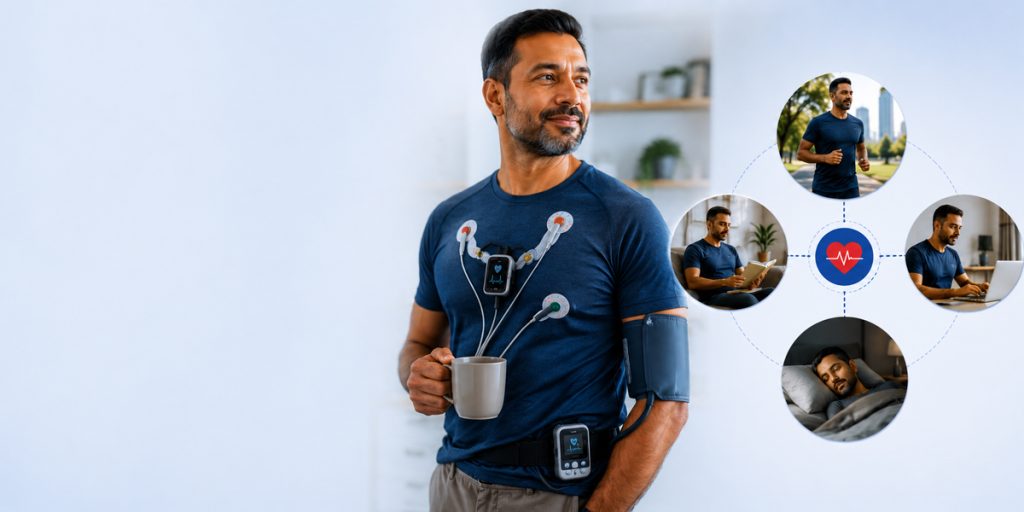
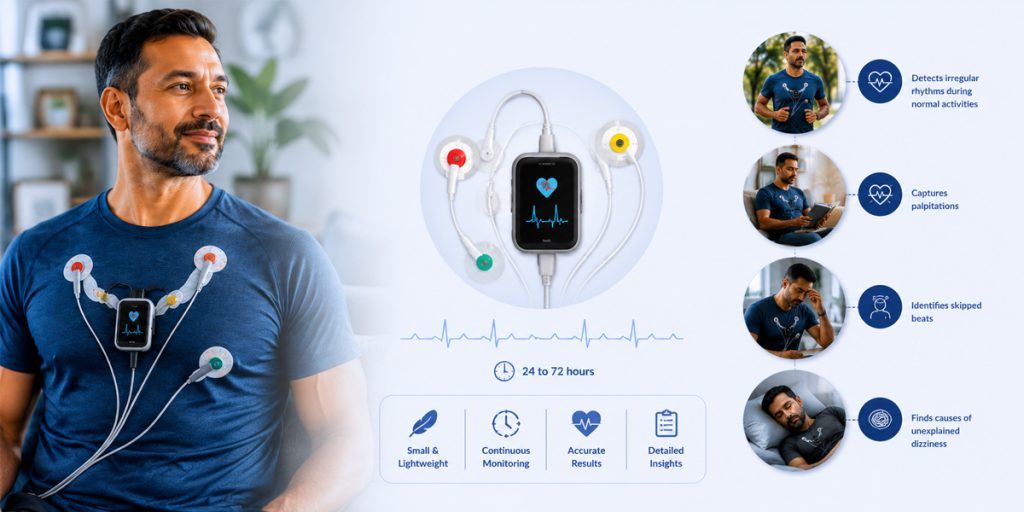
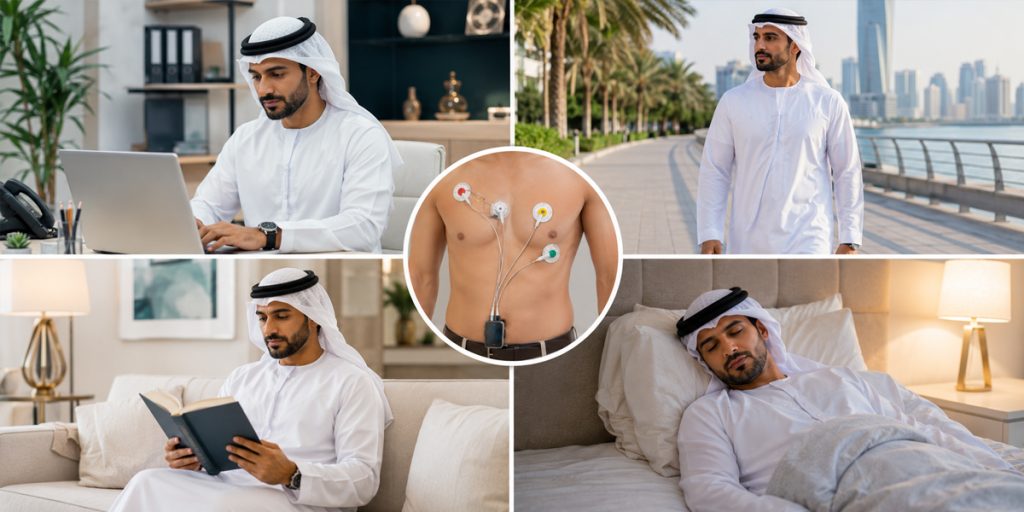
A Holter monitor is a small, lightweight device you wear for 24 to 72 hours that continuously records your heart’s electrical activity. It’s particularly effective at detecting irregular rhythms that come and go — like palpitations, skipped beats, or unexplained dizziness — that wouldn’t be caught in a clinic visit.

What Is a Holter Monitor Adult Cardiology Dubai Al Ain Abu Dhabi
Do You Have 'White Coat' Blood Pressure Adult Cardiology Dubai Al Ain Abu Dhabi

Do You Have 'White Coat' Blood Pressure?

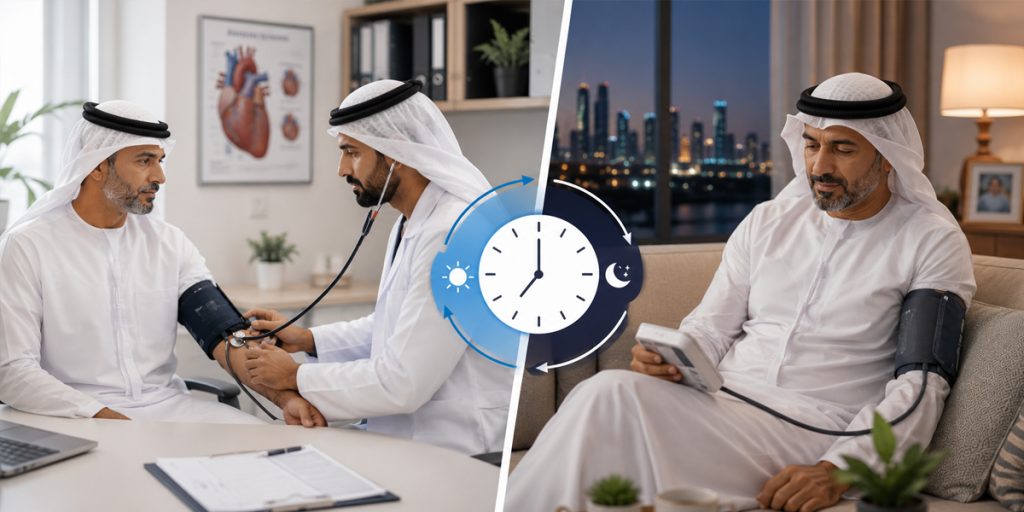
Some people’s blood pressure is elevated at the clinic but normal at home — a pattern called white coat hypertension. Others have the opposite: normal readings in clinic but high blood pressure outside it. A 24-hour ambulatory monitor tells us what your blood pressure is really doing throughout the day.

Wear It During Your Normal Day, It Does the Work for You

Both the Holter monitor and the ambulatory BP cuff are worn during your regular daily activities. You keep a simple diary of what you’re doing and how you feel, which helps us match the data to your symptoms and build a clearer diagnosis.

Adult Cardiology services KidsHeart Dubai Abu Dhabi Al Ain

Monitoring Services Available Across Dubai, Abu Dhabi, and Al Ain

KidsHeart sets up Holter and ambulatory BP monitoring at all our UAE locations, with fast turnaround reports reviewed by our adult cardiologists within 24 to 48 hours of device return.

Results in 1–2 Days, Then a Clear Plan From Your Cardiologist

Once the data is analyzed, your cardiologist will walk you through the findings and explain exactly what they mean for your heart and your health. If treatment or further investigation is needed, we have the next steps ready.

What is a Holter Monitor?

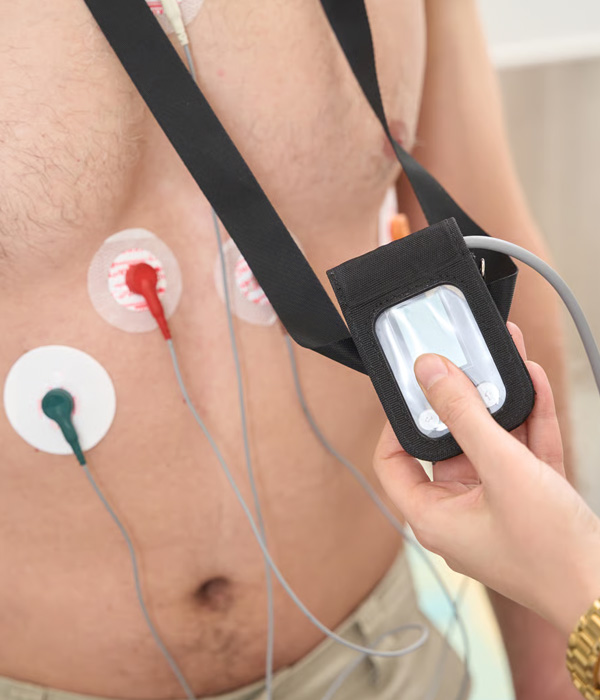
A Holter Monitor is a portable device that continuously records your heart’s electrical activity (ECG) over 24 to 72 hours.
It’s used to:

  • Diagnose intermittent arrhythmias (e.g., skipped beats, palpitations)
  • Evaluate causes of dizziness, fainting, or fatigue
  • Monitor treatment response or medication effects
  • Detect silent rhythm changes during sleep or activity
  • Support long-term management in patients with implanted devices

This test is especially useful if your symptoms are brief and unpredictable.

What is 24-Hour Ambulatory Blood Pressure Monitoring (ABPM)?

ABPM is a test that records your blood pressure at regular intervals over a 24-hour period using a wearable cuff and monitor.
It helps identify:

  • White coat hypertension — high BP only in clinical settings
  • Masked hypertension — normal in clinic but elevated outside
  • Night-time (nocturnal) hypertension
  • Effectiveness of current blood pressure medications
  • Risk of stroke, heart failure, or kidney disease due to blood pressure trends

ABPM gives a complete picture of how your blood pressure behaves during a typical day and night.

What to Expect During the Test

For Holter Monitoring:

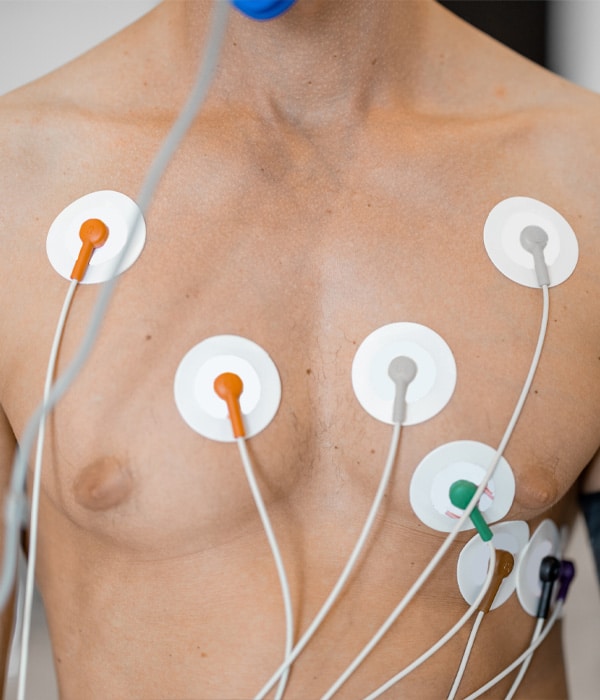
  • Electrodes are placed on your chest and connected to a small monitor worn around your waist or neck
  • You’ll wear the device for 24 to 72 hours
  • You will keep a diary noting any symptoms, activities, or discomfort
  • Showering or swimming should be avoided while the device is on
  • After monitoring, the data is analyzed by our cardiology team

For ABPM:

  • A cuff is placed on your upper arm and attached to a small device worn on a strap or belt
  • It inflates automatically every 15–30 minutes throughout the day and night
  • You’ll be asked to maintain normal daily activities
  • After 24 hours, the device is returned for data download and interpretation

Why Choose KidsHeart?

  • Tests are prescribed and reviewed by specialist Adult Cardiologists
  • Same-day setup with detailed instructions and support
  • Fast turnaround on reports (within 1–2 working days)
  • Results explained clearly, with treatment plans if needed

These tools help us diagnose what routine testing might miss — giving you answers based on actual, lived heart performance.

No Doctors found! with ID: 11398

Capture the Full Picture of Your Heart and Blood Pressure

At KidsHeart, Holter and 24-Hour BP Monitoring allow us to see what’s happening when symptoms strike — not just during your appointment.

We proudly offer these services in Major Cities like Dubai, Abu Dhabi, and Al Ain.

Frequently Asked Questions (FAQs)

The devices are lightweight and well-tolerated. The BP cuff may cause mild pressure during inflation, especially at night.

Yes. Both Holter and ABPM devices are designed to be worn during normal activities. Just avoid getting them wet.

Note the time and activity in your symptom diary — it helps correlate symptoms with data.

Possibly. They are sometimes repeated to monitor changes or treatment effectiveness over time.

Reports are typically ready in 24–48 hours after device return, followed by a consultation with your cardiologist.