Play-Based ABA Techniques

Using Natural Play Environments to Teach Important Social and Communication Skills
Play-Based ABA Techniques Applied Behavioral Analysis Dubai Al Ain Abu Dhabi

At KidsHeart Medical Center Abu Dhabi, we make learning feel natural — by turning everyday play into powerful learning moments.
Play-based ABA techniques blend structured behavioral principles with the natural curiosity and joy children bring to play.

Whether it’s building blocks, pretend games, or turn-taking with peers, our therapists use play as the medium to teach social connection, communication, and cooperation. Explore our ABA-based programs here.
Because when children are engaged, learning sticks.

Play-Based ABA Techniques Applied Behavioral Analysis Dubai Al Ain Abu Dhabi
Children Learn Best When They Don't Know They're Learning ABA Therapy KidsHeart Abu Dhabi Al Ain

Children Learn Best When They Don't Know They're Learning

Play-based ABA uses a child’s natural engagement with toys, games, and movement as the medium for teaching – embedding communication targets, social skills, and behavioral goals into interactions the child is already motivated to have. The science behind it is exactly the same as structured ABA; the delivery is warmer and more natural.

A Child Who Refuses Table-Based Therapy Often Thrives With This Approach

Not every child tolerates sitting at a table for structured drill work – especially toddlers, highly active children, or those with significant sensory sensitivities. Play-based ABA meets those children where they are, using their own interests and play patterns as the starting point for teaching.

A Child Who Refuses Table-Based Therapy Often Thrives With This Approach ABA Therapy KidsHeart Abu Dhabi Al Ain

The Therapist Follows the Child - and Teaches Along the Way

Sessions involve the therapist entering the child’s play world rather than directing it. By following the child’s lead and embedding teaching opportunities into whatever the child is already doing, therapists can address joint attention, requesting, turn-taking, and flexible play without the child experiencing the interaction as instruction.

Play Skills Themselves Are a Target, Not Just a Vehicle

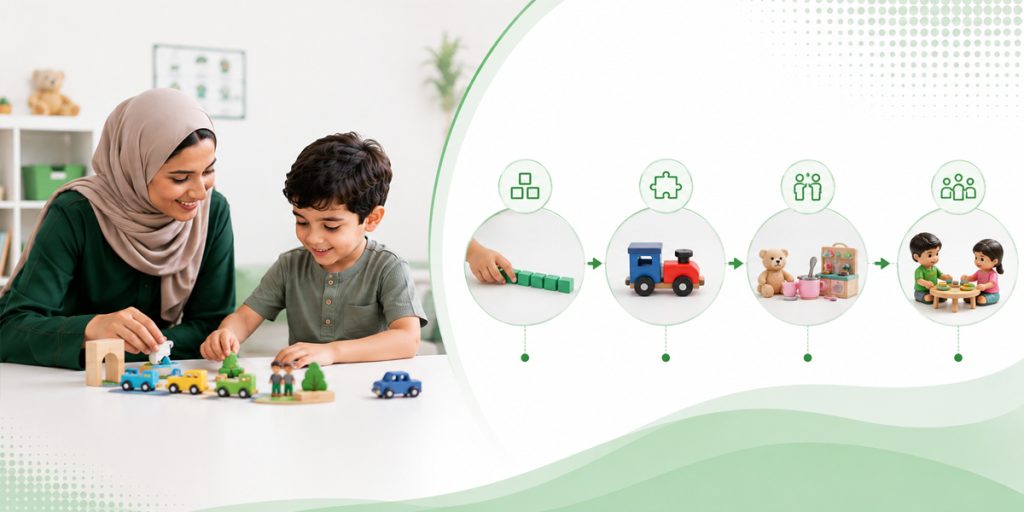
Many children with autism or developmental delays have very limited or rigid play – lining up objects, spinning wheels, or repeating the same sequence in isolation. Expanding and varying those patterns – toward functional, then imaginative, then cooperative play – is itself a meaningful therapeutic goal, not just a backdrop for other goals.

What We Teach in Play Has to Transfer to Real Life

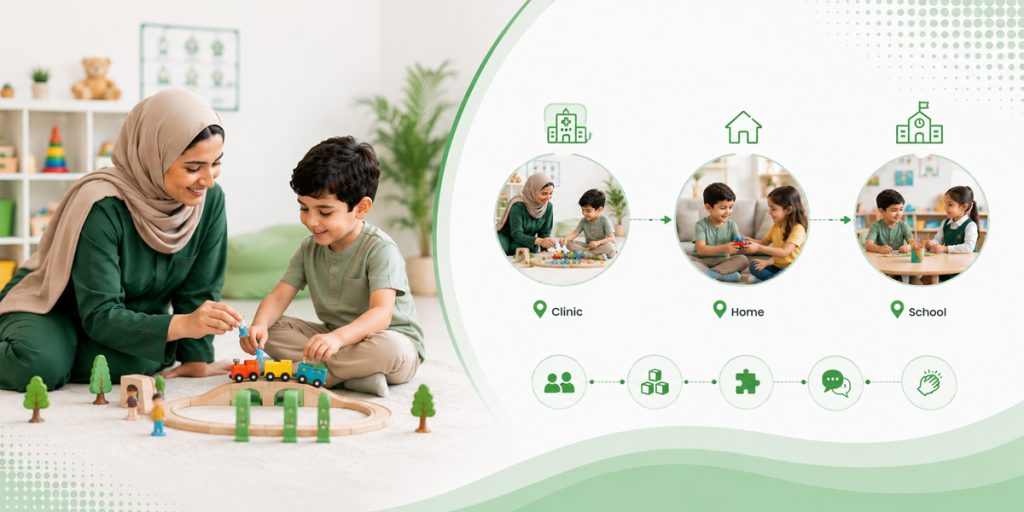
A child who can take turns with a therapist using a specific toy needs to be able to do that with their sibling at home and their classmates at school. Generalization – teaching skills across people, settings, and materials – is built into our play-based approach from the start, not added as an afterthought.

Play-Based ABA in Abu Dhabi

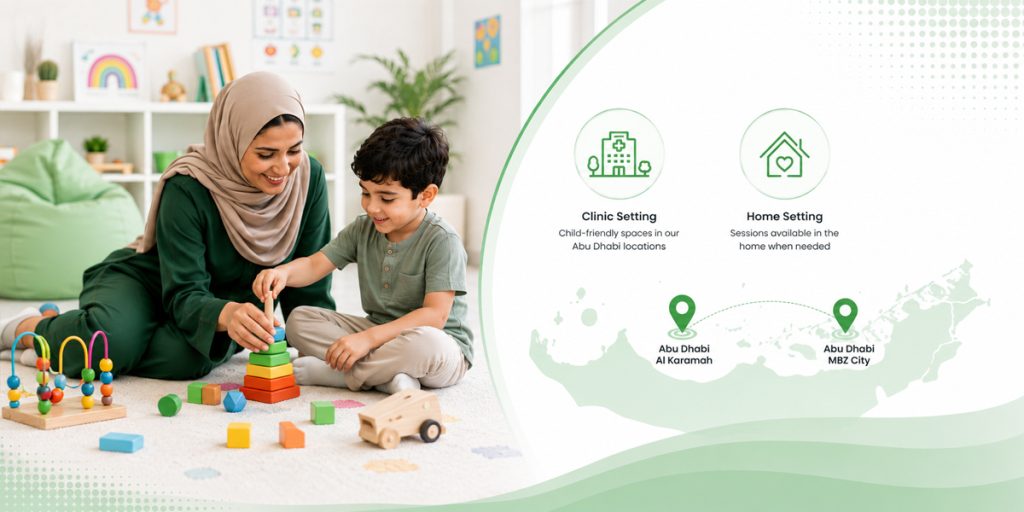
KidsHeart’s play-based ABA sessions take place in warm, child-friendly spaces at our Abu Dhabi locations, designed to feel safe and inviting for children who may be new to therapy or who have found more structured approaches difficult. Sessions can also be delivered in the home setting when that better supports the child’s goals.

What Are Play-Based ABA Techniques?

These are therapeutic methods that embed ABA strategies within play, making learning feel less like work and more like fun.
We use play to target:

  • Joint attention and eye contact
  • Sharing, taking turns, and cooperative games
  • Asking for help or items
  • Following instructions within a playful setting
  • Expanding pretend and imaginative play
  • Reducing avoidance or rigidity during social tasks

The therapist follows the child’s lead — while embedding structured opportunities to teach and reinforce key skills.

When Is This Approach Helpful?

Play-based ABA may be especially effective if your child:

  • Is resistant to traditional table-based therapy
  • Has limited or repetitive play patterns
  • Avoids social interaction with peers or siblings
  • Struggles with transitions or shared attention
  • Is in early intervention or preschool age
  • Needs support generalizing skills from therapy to home or school

It’s also an ideal way to gently introduce therapy to younger children who are new to support services.

What to Expect at KidsHeart

  1. Assessment Through Play: We observe how your child initiates, responds, and interacts during play.
  2. Goal Setting: Communication, social, and engagement goals are selected based on their interests and developmental stage.
  3. Therapy Sessions: Sessions involve toys, games, movement, and therapist-child interaction with guided instruction.
  4. Natural Environment Teaching: We use realistic, everyday play contexts to build real-world readiness.
  5. Parental Involvement: Parents are shown how to use playful moments at home for teaching and connection.

At KidsHeart Medical Center Abu Dhabi, play is serious work — and seriously effective.

Why Choose KidsHeart?

  • Therapists trained in early childhood and behavioral play strategies
  • A warm, child-friendly environment built for exploration and growth
  • Emphasis on generalizing skills across settings — not just in the clinic
  • Sessions tailored to your child’s developmental level and interests
  • Parent coaching to bring the same strategies into daily home routines

We believe children learn best when they’re engaged — and play is the most natural way to connect, teach, and grow.

 

Play Is the Work of Childhood

At KidsHeart Abu Dhabi, we use play not just to entertain, but to engage, teach, and connect. Our play-based ABA techniques help children grow — naturally, joyfully, and with expert guidance.

Frequently Asked Questions (FAQs)

Play-based ABA uses the same core principles but delivers them through games and natural activities instead of structured drills.

Yes. It’s evidence-based and goal-driven — just more flexible and child-centered.

We follow their interests — whether it’s books, movement, water play, or music. Play doesn’t have to mean toys.

Absolutely. Many of our communication goals are taught through playful back-and-forth exchanges.

Yes. We show you how to turn daily play into meaningful teaching opportunities.