

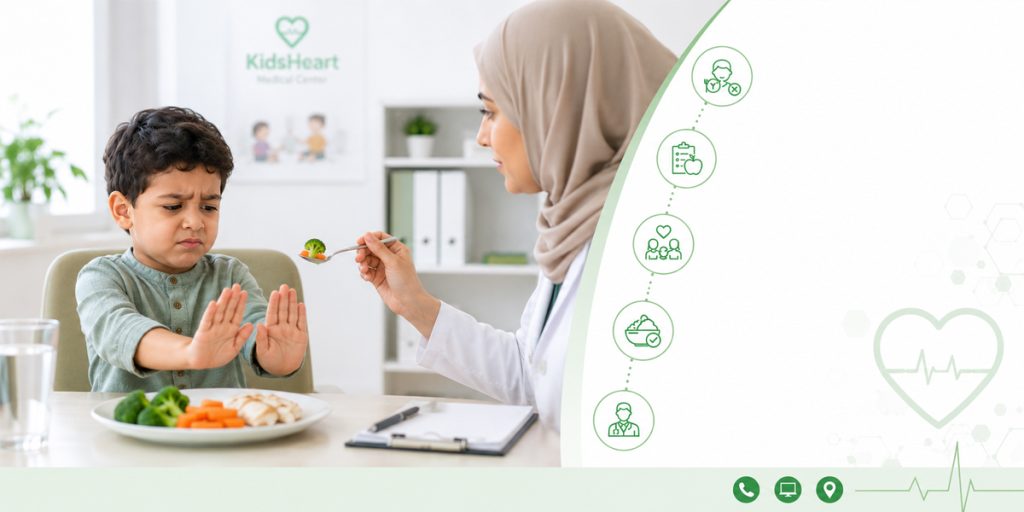





Eating Disorders in Adolescents

Eating Disorders in Adolescents

Early Intervention for Conditions Like Anorexia and Bulimia
Eating Disorders in Adolescents Child & Adolescent Psychiatry Anger Management KidsHeart Abu Dhabi Alain

Eating disorders are not just about food — they reflect deep emotional distress and struggles with control, self-image, or anxiety. At KidsHeart Medical Center, we provide compassionate, evidence-based care for adolescents facing anorexia, bulimia, and other eating-related challenges.

Our focus is on restoring both physical health and emotional well-being through early, structured support. Learn more about our Child & Adolescent Psychiatry Services here.

Eating Disorders in Adolescents Child & Adolescent Psychiatry Anger Management KidsHeart Abu Dhabi Alain
Eating Disorders Are About Control, Not Food Child & Adolescent Psychiatry KidsHeart Abu Dhabi Al Ain

Eating Disorders Are About Control, Not Food

Anorexia, bulimia, and binge eating disorder are not about vanity or food preferences. They’re about emotional pain finding an expression through eating. A teenager who restricts severely is often trying to control something in a life that feels uncontrollable. That’s the place treatment has to start.

Warning Signs That Parents Often Attribute to Teenage Phase

Skipping meals, sudden interest in counting calories, exercising immediately after eating, going to the bathroom right after dinner – these behaviors are easy to normalize in adolescence. By the time they look serious, they’re often well-established. Early intervention is significantly more effective than late.

Social Media and Body Image in UAE Adolescents Child & Adolescent Psychiatry KidsHeart Abu Dhabi Al Ain

Social Media and Body Image in UAE Adolescents

The cultural and social pressures adolescents face – including exposure to highly edited body images online – are real contributors to how eating disorders develop and sustain. Our clinicians understand this context and address it directly in therapy rather than treating eating behavior in isolation from environment.

Medical Monitoring Runs Alongside Psychiatric Care

Eating disorders carry physical health risks – electrolyte imbalances, cardiac irregularities, hormonal disruption – that require medical oversight alongside the psychological work. We coordinate with pediatricians and nutrition specialists to ensure the physical dimension of recovery is being managed at the same time.

Medical Monitoring Runs Alongside Psychiatric Care Child & Adolescent Psychiatry KidsHeart Abu Dhabi Al Ain
Parents Need Specific Guidance on How to Help Child & Adolescent Psychiatry KidsHeart Abu Dhabi Al Ain

Parents Need Specific Guidance on How to Help

Well-meaning parental responses – commenting on portions, monitoring meals, expressing worry about weight – can inadvertently maintain eating disorder behaviors. Our family counseling sessions give parents concrete guidance on what helps recovery and what, despite good intentions, makes things harder.

Eating Disorder Treatment in Abu Dhabi, and Al Ain

KidsHeart’s child psychiatry team provides compassionate, integrated care for adolescents with eating disorders across our UAE locations. Recovery takes time, but early engagement with the right team makes a significant difference to both speed and sustainability.

Eating Disorder Treatment in Abu Dhabi, and Al Ain Child & Adolescent Psychiatry KidsHeart

Understanding Eating Disorders

Eating disorders are serious mental health conditions that can affect thoughts, emotions, and physical health. They often emerge during adolescence, a time of rapid growth, self-awareness, and social pressure.

The most common types include:

  • Anorexia Nervosa – Restricting food intake, intense fear of weight gain, and distorted body image.
  • Bulimia Nervosa – Cycles of binge eating followed by behaviors like vomiting, fasting, or excessive exercise.
  • Binge Eating Disorder – Frequent episodes of eating large amounts of food with loss of control, often followed by guilt or shame.

These conditions are treatable, especially when identified early.

When to Seek Help

Seek an evaluation if your child:

  • Shows sudden or extreme changes in eating habits
  • Avoids meals or becomes preoccupied with calories and weight
  • Exercises excessively or hides food
  • Experiences mood swings, anxiety, or withdrawal
  • Shows unexplained weight loss or fatigue
  • Expresses self-criticism or dissatisfaction with body image

Early intervention can prevent serious medical and emotional complications.

How KidsHeart Supports Eating Disorder Recovery

We address both the physical and emotional sides of eating disorders through coordinated care.

  • Comprehensive Assessment: Exploring emotional triggers, eating patterns, and medical health.
  • Individual Therapy: Cognitive-behavioral and supportive therapy to challenge distorted thoughts and rebuild self-esteem.
  • Family Counseling: Guiding parents on how to provide structure, empathy, and balanced support.
  • Nutritional and Medical Monitoring: Coordinating with pediatricians and nutrition specialists to restore safe eating patterns.
  • Medication (if needed): For co-occurring anxiety, depression, or obsessive symptoms.
  • School Collaboration: Ensuring understanding and flexibility during treatment and recovery.

Our approach prioritizes dignity, safety, and empowerment throughout recovery.

Why Families Choose KidsHeart

  • Compassionate, multidisciplinary care for eating disorders
  • Integration of therapy, medical monitoring, and family involvement
  • Experienced child psychiatrists and psychologists familiar with adolescent needs
  • Focus on early detection and sustainable recovery
  • Services available in Abu Dhabi, Dubai, and Al Ain

We aim to help adolescents rebuild a healthy relationship with food, body, and self.


Restoring Health, Rebuilding Confidence

Recovery from an eating disorder takes time and teamwork — but it is always possible.
Book an eating disorder consultation in Abu Dhabi, Dubai, or Al Ain today.

Frequently Asked Questions (FAQs)

They develop from a mix of genetics, personality traits, emotional factors, and environmental pressures.

They can be, which is why early intervention is essential for safety and recovery.

Only if their physical health is at immediate risk. Most can be treated through outpatient therapy and medical monitoring.

Avoid focusing on weight or appearance. Instead, encourage open communication, patience, and ongoing professional support.

Only when they’re ready. Our approach respects pace and emotional boundaries.