

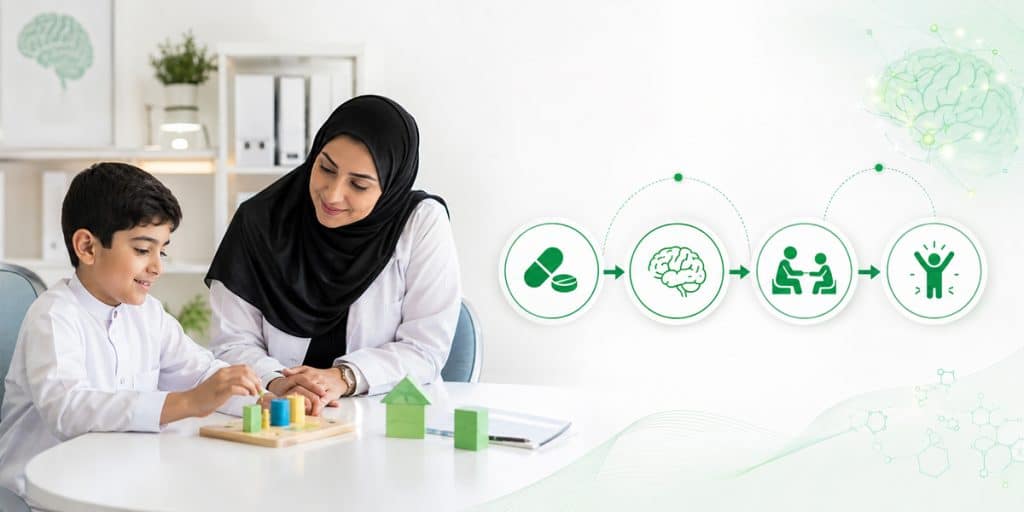





Integrated Medication and Therapy Approach

Integrated Medication and Therapy Approach

Combining Psychotherapy And Carefully Monitored Medication Management
Integrated Medication and Therapy Approach Child & Adolescent Psychiatry Anger Management KidsHeart Abu Dhabi Alain

At KidsHeart Medical Center, we understand that effective mental health care sometimes requires more than one approach. For some children and adolescents,

combining therapy with carefully monitored medication can bring balance and relief faster — supporting both emotional healing and daily functioning. Learn more about our Child & Adolescent Psychiatry Services here.

Integrated Medication and Therapy Approach Child & Adolescent Psychiatry Anger Management KidsHeart Abu Dhabi Alain
Medication Alone Cannot Teach a Child to Cope Child & Adolescent Psychiatry KidsHeart Dubai Abu Dhabi Al Ain

Medication Alone Cannot Teach a Child to Cope

When medication is needed, it creates a window – reduced symptom intensity, better concentration, more emotional availability. But that window has to be filled with therapy for lasting change to happen. An integrated approach uses medication to make the emotional work of therapy more accessible, not to replace it.

Medication Is Never the First Conversation

At KidsHeart, medication is considered only after a thorough evaluation and after therapy alone has been given a genuine chance. When we do recommend it, the decision is made collaboratively with families – never as a default, always with a clear reason and a plan for monitoring.

When Both Are Needed, the Coordination Matters

Children receiving both therapy and medication need their prescribing psychiatrist and their therapist working from the same understanding. At KidsHeart, our psychiatrists and psychologists communicate directly – so the two sides of care don’t run in parallel but actually reinforce each other.

Conditions Where This Combined Approach Often Helps Most

Moderate to severe depression, persistent anxiety, ADHD with significant emotional dysregulation, OCD, and mood instability – these are the conditions where evidence most strongly supports combining therapy with carefully monitored medication. The goal is always the lowest effective dose alongside consistent psychological support.

Conditions Where This Combined Approach Often Helps Most Child & Adolescent Psychiatry KidsHeart Dubai Abu Dhabi Al Ain

Parents Stay at the Center of Every Decision

No medication is prescribed for a child without a full family conversation – about what it is, what it’s for, what to watch for, and how it will be reviewed. We provide written information, answer every question, and build in regular check-ins so families feel informed throughout.

Integrated Care in Abu Dhabi and Al Ain

KidsHeart’s combined psychiatry and psychology approach is available at our UAE locations. Our team works across disciplines under one roof, giving children access to both medication management and evidence-based therapy without families having to coordinate across separate providers.

What Is an Integrated Medication and Therapy Approach?

This approach combines two powerful tools: psychotherapy, which helps children understand and manage emotions, and medication, which helps stabilize symptoms that may otherwise interfere with progress.

Medication is never the first step for every child — but when it is appropriate, it’s used thoughtfully and in close coordination with therapy and family support.

Conditions that may benefit from a combined approach include:

  • Moderate to severe depression
  • Anxiety and panic disorders
  • ADHD and behavioral regulation issues
  • Obsessive-compulsive symptoms
  • Bipolar or mood instability
  • Psychotic symptoms requiring medical stabilization

When to Consider a Combined Approach

You may discuss this option with your clinician if your child:

  • Has not improved with therapy alone
  • Experiences symptoms so severe they disrupt school, sleep, or family life
  • Struggles with concentration, energy, or emotional regulation
  • Has genetic or biological factors contributing to mood or behavior changes

Medication, when needed, is one part of a larger plan — never a replacement for therapy or emotional guidance.

How We Implement Integrated Care at KidsHeart

Our process is deliberate, transparent, and always family-centered:

  • Comprehensive Evaluation: Reviewing mental health history, symptoms, and prior responses to therapy.
  • Collaborative Planning: The psychiatrist, psychologist, and family agree on the treatment structure.
  • Medication Selection and Monitoring: Only evidence-based medications are considered, in the lowest effective doses.
  • Therapy Coordination: Psychologists and therapists align sessions to address emotional growth, coping skills, and behavioral strategies.
  • Progress Review: Regular check-ins track both emotional and physical well-being.
  • Family Education: Parents receive clear information about purpose, effects, and safe use of medications.

Our goal is always balance — combining science with empathy.

Why Families Trust KidsHeart

  • Licensed child psychiatrists and psychologists working together under one care plan
  • Transparent discussions about medication choices and goals
  • Emphasis on minimal, monitored use of medication
  • Continuous therapy support for sustainable emotional growth
  • Services available in Dubai, Abu Dhabi, and Al Ain

We believe healing works best when therapy and medication work hand in hand — guided by care, not haste.


Balanced Care for Growing Minds

When medication and therapy work together, recovery becomes more complete — and children feel more like themselves again.
Book a child psychiatry consultation in Abu Dhabi, Dubai, or Al Ain to discuss the right balance for your child.

Frequently Asked Questions (FAQs)

No. Most children begin with therapy, and medication is considered only when symptoms persist or are severe.

When prescribed and monitored properly by experienced specialists, they are safe and well-tolerated.

No. The goal is to reduce distress and restore natural functioning — not to alter personality.

It varies. Some children need it short-term; others may benefit from longer support. Regular reviews guide this decision.

Yes, with your consent. We collaborate closely with teachers and school counselors when appropriate.