


Stress and Anxiety Disorders

Stress and Anxiety Disorders

Teaching Coping Strategies for Daily Stressors and Anxiety Symptoms
Stress and Anxiety Disorders Child & Adolescent Psychiatry Anger Management KidsHeart Abu Dhabi Alain

Worries are a part of life — but when anxiety makes it hard for your child to go to school, sleep through the night, or try new things, it may be time for support.

At KidsHeart Medical Center, we help children and adolescents manage stress and anxiety through thoughtful evaluation and proven coping techniques. Learn more about our Child & Adolescent Psychiatry Services here.

Stress and Anxiety Disorders Child & Adolescent Psychiatry Anger Management KidsHeart Abu Dhabi Alain
Tummy Aches Before School That Never Have a Medical Cause Child & Adolescent Psychiatry KidsHeart Abu Dhabi Al Ain

Tummy Aches Before School That Never Have a Medical Cause

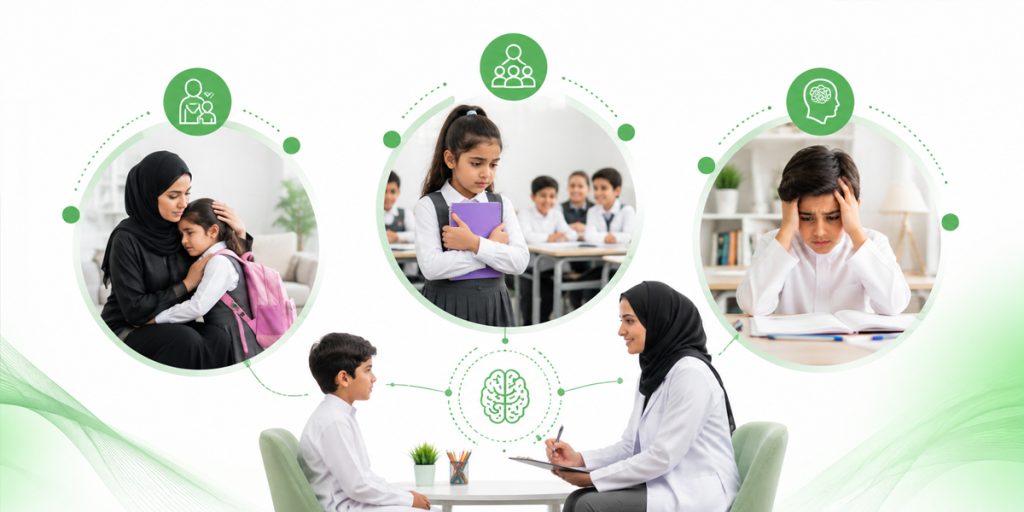
Children are often better at feeling anxiety in their bodies than describing it in words. Recurring stomachaches, headaches, or nausea – especially on school mornings or before social events – are worth taking seriously. A psychiatry assessment can identify whether anxiety is the driver.

Constant Reassurance Seeking Is a Sign, Not Just a Habit

“Are you sure it’s fine?” “What if something goes wrong?” When a child asks the same question repeatedly despite being reassured, their brain is caught in an anxiety loop – and reassurance alone can quietly make the loop stronger. Therapy helps break the pattern at its root.

Separation Anxiety, Social Anxiety, and Generalized Worry Are Distinct Child & Adolescent Psychiatry KidsHeart Abu Dhabi Al Ain

Separation Anxiety, Social Anxiety, and Generalized Worry Are Distinct

Anxiety in children shows up in different forms. A child terrified to go to school may have separation anxiety. One who refuses to speak in class may have social anxiety. A child who worries about everything may have generalized anxiety disorder. Accurate identification shapes the entire treatment approach.

Coping Tools That Work in Real Life, Not Just in Clinic

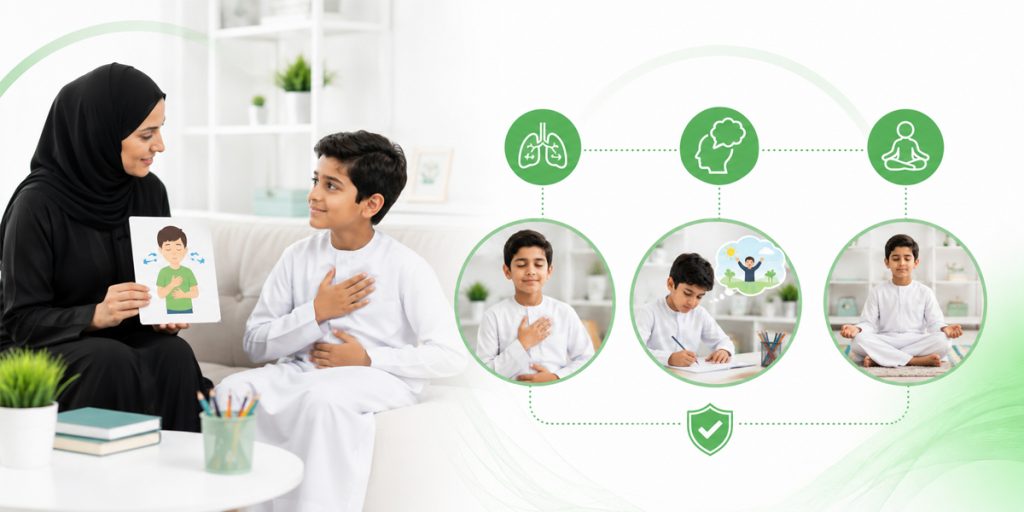
Breathing exercises, grounding techniques, and thought-reframing strategies are only useful if children actually use them when anxiety hits. We teach these skills in ways that stick – through practice, repetition, and parent reinforcement – so they’re available when a child needs them most.

Parents Are Part of the Treatment Medical Cause Child & Adolescent Psychiatry KidsHeart Abu Dhabi Al Ain

Parents Are Part of the Treatment

How parents respond to a child’s anxiety can either ease it or reinforce it. Our parent coaching sessions give specific, practical guidance – not generic advice – on how to support an anxious child without enabling avoidance or accidentally adding to the pressure.

Anxiety Support in Abu Dhabi, and Al Ain

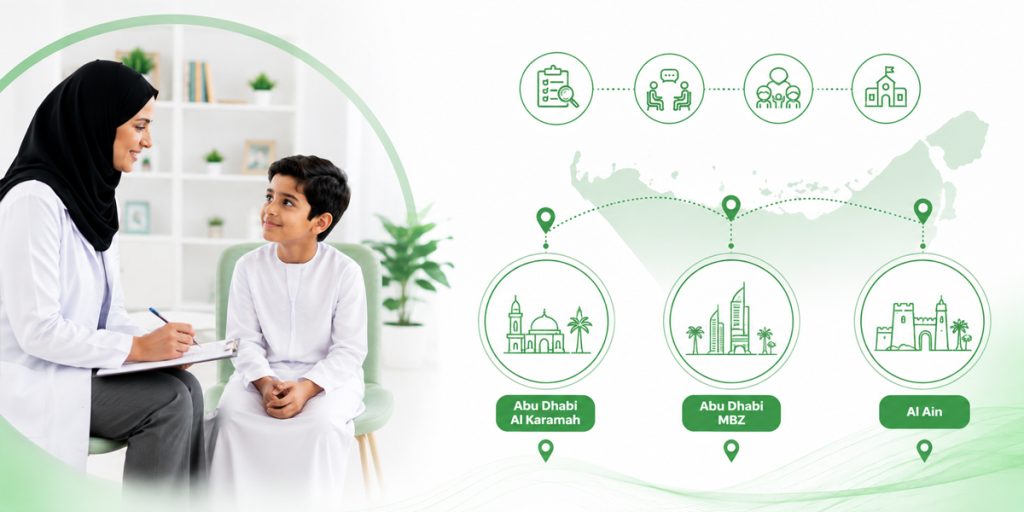
Our child psychiatry team treats stress and anxiety disorders across all three KidsHeart locations in the UAE. From the first assessment to ongoing therapy and school coordination, we stay involved at every stage of your child’s progress.

What Are Anxiety Disorders in Children?

Anxiety disorders go beyond typical worry. They are patterns of excessive fear or nervousness that interfere with daily routines, relationships, or confidence.

Types of anxiety we commonly see include:

  • Generalized Anxiety: Ongoing worry about school, health, or everyday issues
  • Separation Anxiety: Extreme distress when away from parents or caregivers
  • Social Anxiety: Fear of embarrassment or judgment in social settings
  • Specific Phobias: Intense fears of certain objects or situations (e.g., insects, darkness)
  • Panic Disorder: Sudden, intense episodes of fear with physical symptoms

Children may describe anxiety as “my tummy hurts,” “I can’t breathe,” or “I don’t want to go.”

When to Seek Help

An evaluation can help if your child:

  • Worries constantly or asks for repeated reassurance
  • Avoids school, social activities, or new experiences
  • Has trouble sleeping due to fears or overthinking
  • Complains of physical symptoms (nausea, headaches) with no clear cause
  • Melts down during transitions or small challenges
  • Seems tense, fidgety, or overwhelmed most days

Early support gives children the tools to manage anxiety before it disrupts development.

How We Help at KidsHeart

We combine expert assessment with coping tools your child can use in real life.

  • Parent and Child Interviews: Understanding when anxiety shows up and how it affects daily life
  • Behavioral and Emotional Screening: Identifying types and levels of anxiety
  • Cognitive-Behavioral Therapy (CBT): Teaching how to notice and reframe anxious thoughts
  • Coping Skills Training: Relaxation, breathing techniques, and calming routines
  • Gradual Exposure Support: Helping children face fears in a safe, structured way
  • Parent Coaching: Guidance on responding calmly without reinforcing fear
  • School Collaboration: Recommendations for classroom support and reduced anxiety triggers

Every child’s plan is personalized — because every child’s anxiety looks different.

Why Parents Choose KidsHeart for Anxiety Support

  • Expertise in pediatric anxiety, stress, and mood disorders
  • Tools that are practical, age-appropriate, and easy to use
  • Calm, respectful environments that don’t overwhelm sensitive children
  • Parent-focused strategies to build consistency at home
  • Locations in Abu Dhabi, Dubai, and Al Ain

We focus not just on calming worry — but helping children feel more capable and in control.


Helping Children Face the Day With Confidence

If your child’s anxiety is making daily life harder, we’re here to help. With the right tools, anxiety becomes something they manage — not something that manages them.
Book a child psychiatry consultation in Abu Dhabi, Dubai, or Al Ain today.

Frequently Asked Questions (FAQs)

If anxiety interferes with school, sleep, social life, or daily functioning, it’s worth a professional look.

Yes. Stomachaches, headaches, dizziness, and fatigue are common in anxious children.

We use play, drawing, and observation to gently explore what your child is experiencing.

Usually not. Most children respond well to therapy alone. Medication is considered only when needed.

Yes. We often collaborate with teachers to reduce anxiety triggers and improve classroom participation.