Fibroid Management
Fibroid Management
Clarity on fibroids, and a path forward.
Uterine fibroids are among the most common benign growths in women, yet they are often discovered incidentally or only after symptoms have already begun to affect daily life. At KidsHeart Medical Center,
our gynecology services include thorough fibroid assessment and personalised treatment planning for women in Dubai, Abu Dhabi, and Al Ain. Whether your fibroids are newly found or monitored for some time, we help you understand what they mean and what your options are.
What Are Uterine Fibroids?
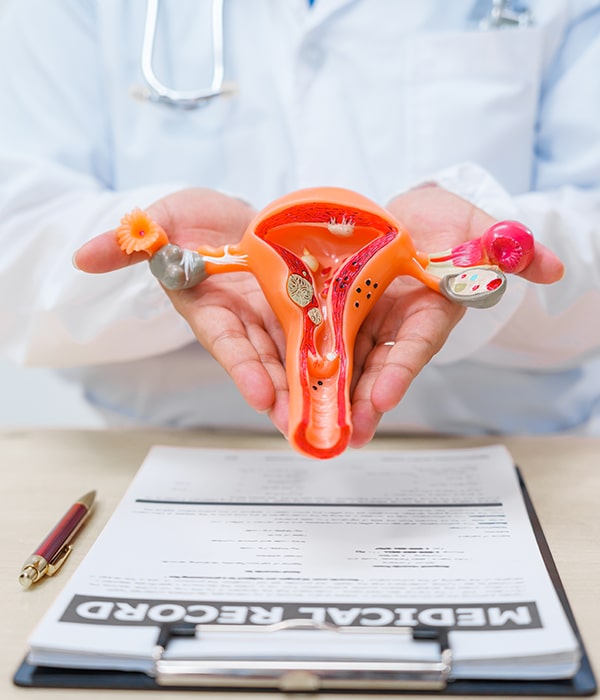
Fibroids are non-cancerous growths that develop within or on the uterine wall. They vary in size, number, and location, and not all cause symptoms. When they do, effects range from mild discomfort to disruption of daily life and fertility. They are most common between the ages of 30 and 50.
Symptoms That May Point to Fibroids
Many women with fibroids have no symptoms. Others notice one or more of the following:
- Heavy or prolonged menstrual bleeding
- Pelvic pressure, fullness, or a dull ache
- Frequent urination or difficulty emptying the bladder fully
- Pain during intercourse
- Lower back discomfort
- Difficulty conceiving or recurrent pregnancy loss
Diagnosis and Treatment Planning
Our approach begins with understanding the size, position, and number of fibroids before any decision about management is made.
- Pelvic ultrasound as the primary imaging tool for fibroid mapping
- MRI where more detailed assessment of fibroid type or location is needed
- Hormonal blood work to assess cycle health and estrogen influence
- Medical management options to reduce bleeding and shrink fibroids
- Conservative monitoring for small, asymptomatic fibroids with no impact on fertility
- Referral for surgical options when clinically indicated
Not every fibroid needs treatment. Our role is to give you accurate information so you can decide with confidence.
Specialist Care You Can Rely On
- Gynecology specialists experienced in benign uterine conditions
- On-site imaging for same-visit fibroid assessment
- Honest, non-alarmist guidance on when to monitor versus when to act
- Fertility considerations built into every treatment discussion
- Clinics serving women in Dubai, Abu Dhabi, and Al Ain
Know What You Are Dealing With
A fibroid diagnosis can feel unsettling, but most women find that clarity is the biggest relief. Our team will walk you through your findings and help you decide on the right next step. Schedule an appointment with our gynecology specialists today.
Frequently Asked Questions (FAQs)
No. Many fibroids are managed conservatively through monitoring or medication. Surgery is considered only when symptoms are significant or fertility is affected.
In some cases, yes. Fibroids near or inside the uterine cavity can interfere with implantation. Your specialist will assess this as part of your consultation.
New fibroids can develop after treatment, particularly if managed medically rather than surgically. Regular monitoring helps catch any changes early.
Fibroids typically shrink after menopause as estrogen levels fall. If you are approaching menopause, this is factored into your management plan.
Most women with asymptomatic fibroids are reviewed every six to twelve months, based on size and location.