
One word, two different problems
When a premature baby is said to have a “heart problem,” it usually means one of two things. The difference shapes everything that follows.
The first is a transitional finding: a part of the fetal circulation that has not closed yet, because the baby arrived before the body was ready to close it. The best known is the patent ductus arteriosus (PDA), a blood vessel every baby relies on before birth. In a full-term newborn it usually seals within the first few days. In a baby born early, it often stays open longer, and sometimes it needs help to close.
The second is a congenital heart defect (CHD): a structural difference in the walls, valves or vessels of the heart that formed in the first weeks of pregnancy, regardless of when the baby was born. A hole between the pumping chambers. A narrowed section of the aorta. A valve that did not form the usual way.
The two can sit side by side in the same baby. Research from Duke University, published in The Journal of Pediatrics, found severe congenital heart disease in about 7.4 per 1,000 babies born between 25 and 32 weeks, compared with 1.5 per 1,000 babies born at term. So a cardiologist does not assume that every murmur in a preterm infant is the ductus. Each one gets a proper look.
Why an early birth puts the heart in a harder position
At birth, a baby’s circulation has to rearrange itself within hours. Blood that bypassed the lungs before delivery now needs to flow through them. Pressures inside the heart and lungs shift. Vessels that were open close down.
A full-term baby has had nine months to prepare for that switch. A baby born at 28 or 32 weeks has had less time, and the lungs doing the extra work are still immature. When a ductus stays open, more blood can wash back into the lungs than they can comfortably handle. That can make breathing harder, slow weight gain, or make it difficult to wean oxygen or breathing support.
The relationship also runs in the other direction. A baby with a significant structural defect is somewhat more likely to be born early in the first place, and a defect that would be straightforward to manage in a 3.5 kg newborn can be more delicate in a baby weighing 1.4 kg. Surgery or catheter procedures sometimes wait until a baby is bigger and stronger, which means a period of careful watching and support in between.
None of this predicts how a particular baby will do. It explains why the neonatal team pays such close attention to the heart.
What the team at the bedside keeps an eye on
Many heart findings in premature babies are picked up on routine examination or on an echo ordered for another reason. Others show themselves through small, specific changes. Neonatal nurses and doctors watch for:
- Breathing that stays fast even when the baby is resting
- Tiring partway through feeds, or sweating during them
- Weight gain that stalls despite good intake
- A murmur that is louder, softer or different from one day to the next
- A dusky or bluish tinge around the lips
- Pulses in the wrists or feet that feel unusually strong or weak
Parents often notice the feeding changes first, because they are the ones holding the bottle or the tube syringe. Mentioning them to the team is useful, even when they seem minor.
The echo, in a baby who fits in two hands
The main test is an echocardiogram, an ultrasound of the heart. In a neonatal unit it is done at the bedside, often with the baby still in the incubator, using a small probe and warm gel. It does not hurt, and it uses no radiation.
For a premature infant, a heart ultrasound answers several questions at once. Is the ductus open, and how much blood is crossing it? Are the walls between the chambers intact? Are the valves and the major vessels formed and connected normally? How hard is the heart working?
A single echo is rarely the end of it. A ductus that is open on day three may close on its own by day ten. A small hole in the wall between the lower chambers may shrink over months. Repeat scans show the direction things are moving, which matters more to a cardiologist than any one picture. The same small-hole question comes up in full-term babies too, and our post on VSD in newborns walks through how those holes are followed over time.
Many small ducts close without any treatment, and neonatal teams increasingly give them time to do so when the baby is otherwise coping well. A larger duct that is straining the lungs is a different matter.
When treatment is needed, the options depend on what the echo shows: medicines such as ibuprofen or acetaminophen given in the neonatal unit to encourage the ductus to close, a catheter procedure, or surgery, timed around the baby’s size and overall condition.
Leaving the unit with a heart diagnosis
Discharge day brings relief, and with it a folder of instructions. For a baby with a heart finding, that folder usually includes a cardiology appointment.
What follow-up looks like depends on the diagnosis. A ductus that closed fully may need just one confirming scan. A small structural defect may be checked a few times in the first year and then less often. A more complex defect means a longer relationship with a cardiology team, sometimes coordinated with a surgical center.
Families in Dubai often continue at the Dubai Healthcare City clinic, where the team can review the neonatal echo reports and compare them with new images. Families further from Dubai can be seen at the KidsHeart branches in Abu Dhabi (Al Karamah and MBZ) or at The Heart Medical Center in Al Ain, with the same approach to tracking change over time. Our page on heart defects in newborns describes how that early follow-up is organized.
Growth is part of the cardiac picture. A baby whose heart is working harder burns more calories, so the cardiologist pays attention to the weight curve, measured against corrected age rather than birth date. Regular growth monitoring with a pediatrician gives the cardiology team the numbers it needs between visits.
Parents often leave the neonatal unit with a diagnosis but without a clear picture of what it means at home. The first outpatient visit is the place to fill that gap. Useful things to ask include which signs should prompt a call before the next appointment, whether feeding should change, and whether there are any limits on travel or visitors during the first winter. It also helps to bring the discharge summary and any echo reports, since the details in them shape what the cardiologist looks for.
Some questions will not have firm answers yet. Whether a small hole will close, or exactly when a procedure might be needed, often becomes clear only with time and repeat scans. That uncertainty is normal at this stage, and it is the reason follow-up exists. A cardiologist who says “let’s look again in three months” is usually describing a plan, not avoiding an answer.
Looking past the neonatal unit
World Prematurity Day falls on November 17, and it tends to bring the neonatal stay back into focus for families who have been through one. For most premature babies with a heart finding, the story keeps moving after discharge. A ductus closes. A small defect shrinks or stays harmlessly small. A larger one is repaired at the right size and the right time, and the child grows into an ordinary school-age life with periodic check-ups.
The cardiology part of that story is mostly patience and good records: scans compared over months, weight plotted against corrected age, questions answered as they come up. Our Dubai Healthcare City team, along with colleagues in Abu Dhabi and Al Ain, follows premature babies through exactly that stretch, and a first visit can be arranged through our appointments page whenever the discharge plan calls for one.
Consultant, Fetal & Pediatric Cardiologist – American Board
Assistant professor, Columbia University, New York
Pediatric Cardiac Surgeon – American Board 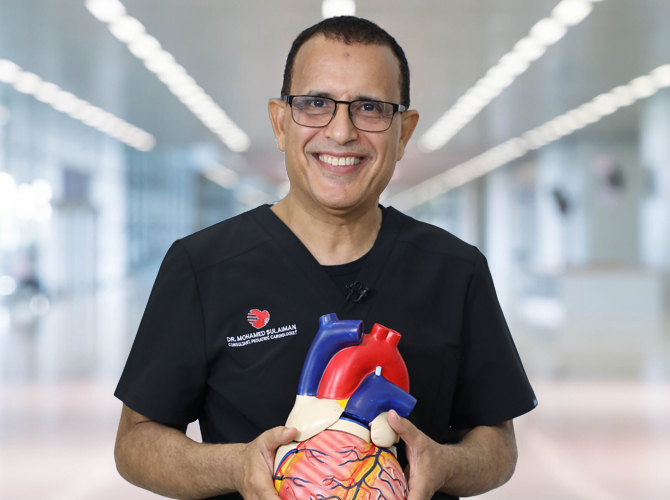
Dr. Mohamed Sulaiman

Dr. Emile A. Bacha