




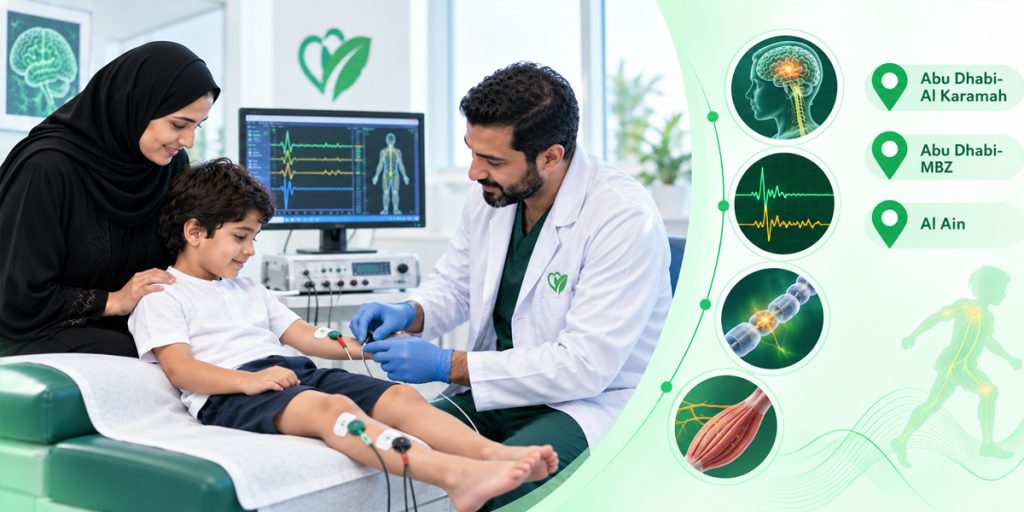
Conduction Disorders in Children
Understanding How the Brain and Body Communicate
When the brain sends a message — to move, feel, or react — that signal travels along nerve pathways. In conduction disorders, that signal gets disrupted. At KidsHeart Medical Center, we help identify and manage these neurological signal issues in children, offering clear explanations and coordinated support.
Families across Dubai, Abu Dhabi, and Al Ain turn to us when symptoms suggest something in the body’s communication network isn’t working as it should.
When the Signal Gets Interrupted
A message from the brain to a muscle usually travels instantly and without a second thought. In conduction disorders, something along that pathway is disrupted, and the result shows up as weakness, numbness, or unusual movement.
Sudden or Gradual, Both Deserve a Look
Muscle weakness that appears overnight is alarming enough to prompt a visit on its own, but a slow decline in coordination or a child losing a skill they’d already mastered deserves the same attention. Timing doesn’t determine urgency here.
Nerve Testing, Explained Simply
Nerve conduction studies and EMG measure how well electrical signals travel through nerves and muscles, giving a concrete read on what’s happening beneath the symptoms. These tests are routine, not experimental.
Not Every Case Looks the Same
Genetic factors, inflammation, injury, or a condition like Guillain-Barré syndrome can all lead to a conduction disorder, and each cause points toward a different treatment path. Getting the cause right changes what comes next.
Therapy Often Makes a Real Difference
Physical and occupational therapy support strength, coordination, and daily function, and for many children the gains are steady rather than dramatic-but-fleeting. Progress here tends to build over months.
Specialist Access in Abu Dhabi, and Al Ain
Advanced nerve and muscle testing shouldn’t require traveling outside the country, and at KidsHeart it doesn’t.
What Are Conduction Disorders?
Conduction disorders affect how electrical signals are transmitted through the brain, spinal cord, or peripheral nerves. These conditions can impact:
- Motor control — delayed or weak movement, muscle tone changes
- Sensation — tingling, numbness, or loss of feeling
- Reflexes and coordination
- Bladder or bowel control in some cases
They can be caused by genetic, inflammatory, traumatic, or demyelinating conditions (like Guillain-Barré syndrome or peripheral neuropathies).
What Should You Watch For?
A child may need evaluation for a conduction disorder if they show:
- Unexplained muscle weakness or frequent falls
- Loss of previously gained motor skills
- Changes in walking, balance, or posture
- Unusual sensations (numbness, tingling)
- Lack of coordination or fine motor difficulty
- Slowed reflexes or abnormal nerve testing results
These symptoms may appear gradually or suddenly — and early assessment is key.
How We Assess and Support
At KidsHeart, we take a methodical and compassionate approach. Our evaluation includes:
- Pediatric neurology consultation and history-taking
- Neurological examination focused on motor, sensory, and reflex function
- Nerve conduction studies (NCS) and electromyography (EMG) when indicated
- Imaging (MRI) or blood work depending on suspected cause
- Referral for physical therapy, occupational therapy, or other specialties if needed
- Clear guidance on diagnosis, next steps, and follow-up care
We help you understand not just what’s happening — but why it’s happening and what can help.
Why Choose KidsHeart?
- Pediatric neurologists with expertise in nerve and muscle disorders
- Access to advanced neurodiagnostic tools in child-friendly settings
- Personalized care plans that focus on function, mobility, and comfort
- Support for families navigating rare or uncertain diagnoses
- Local care options in Dubai, Abu Dhabi, and Al Ain

No Doctors found! with ID: 16561
Clear Signals Begin with Clear Answers
If your child is showing signs of nerve or movement problems, we’re here to help you find the cause — and the next step.
Frequently Asked Questions (FAQs)
No. Epilepsy involves abnormal brain activity. Conduction disorders affect nerve signal transmission through the body.
If motor or sensory pathways are affected, these tests may be recommended to understand nerve and muscle function.
Some are temporary or manageable with therapy and medication. Others require long-term support, which we help coordinate.
Yes. Therapy often plays a major role in maintaining or improving mobility, strength, and coordination.
It’s still important to seek evaluation. Some conduction issues can be intermittent or fluctuate — early detection helps.