Parental Guidance for Home-Based Stimulation Activities
Simple Daily Activities. Big Developmental Impact.
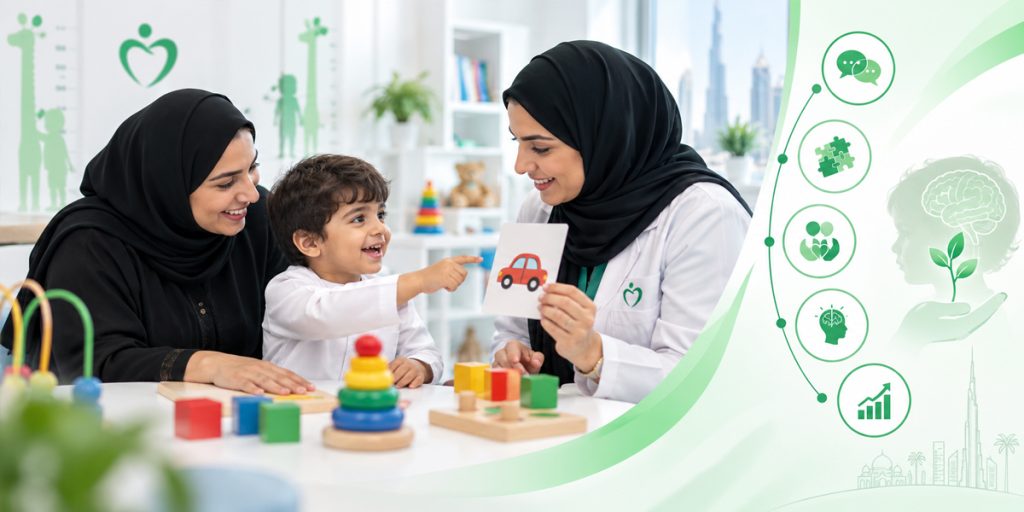
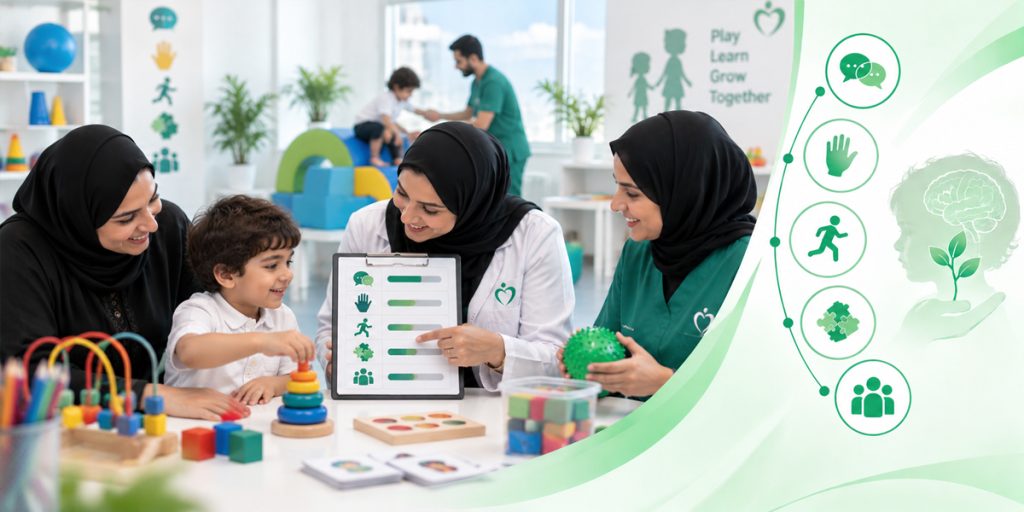
Parents play the most important role in a child’s early development — not through flashcards or fancy programs, but through everyday moments. At KidsHeart Medical Center, we guide families on how to support motor, speech, cognitive, and social development at home using practical, play-based activities.
This advice complements therapy and is offered across our developmental services in Dubai, Abu Dhabi, and Al Ain.
You're Already the Most Important Program Your Child Has
It isn’t flashcards or a formal curriculum that moves development forward most days – it’s the ordinary back-and-forth of playing, naming things, and responding to your child. That happens whether or not you’re thinking about it as “therapy.”
Matched to What Your Child Is Actually Working On
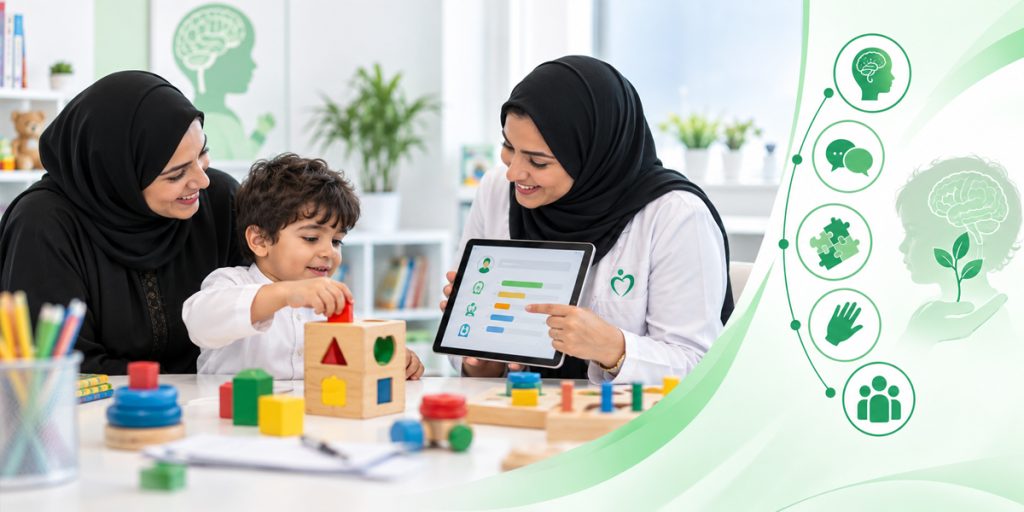
A generic list of activities pulled from anywhere online doesn’t know what your child’s last assessment flagged. We build suggestions around the specific skills that came out of your child’s own developmental profile.
Motor, Speech, Sensory, Cognitive, Social – Pick What Fits
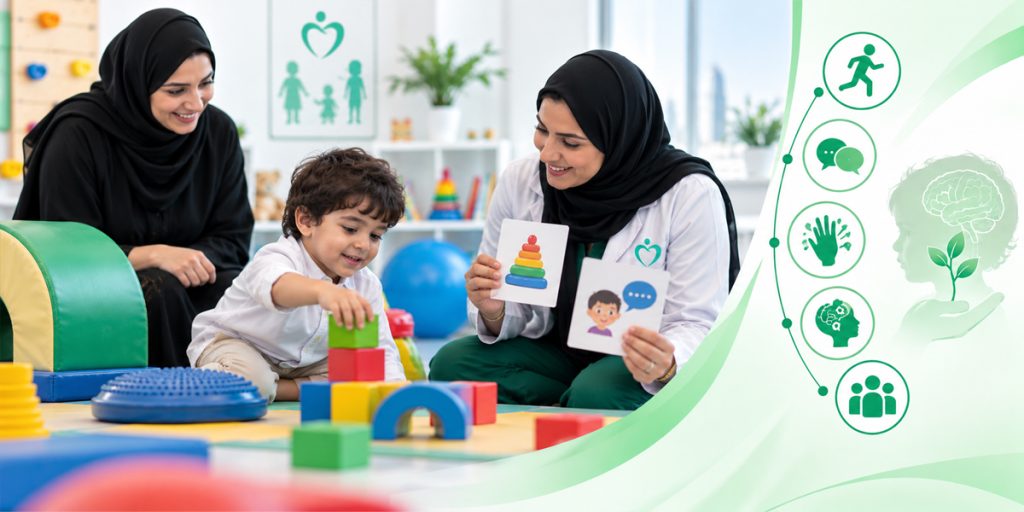
Climbing cushions and stacking blocks build one set of skills, naming objects and turn-taking games build another, and most children need a mix rather than all five categories at once. We help you figure out where to put your energy first.
No New Toys Required
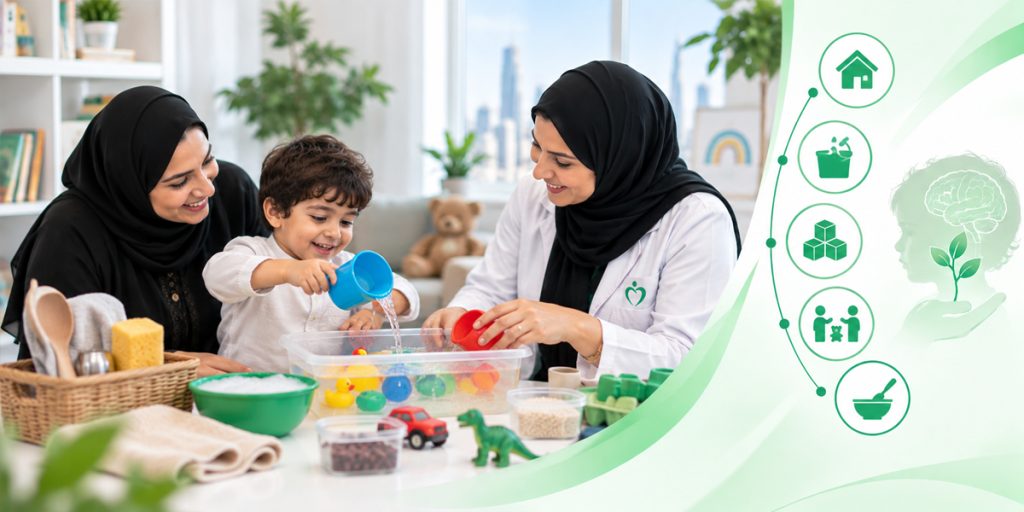
Water play, textured objects, and pretend games mostly use what’s already around the house. The goal is a screen-free routine that fits into your day, not a shopping list.
This Runs Alongside Therapy, Not Instead of It
If your child is already receiving speech, occupational, or behavioral therapy, home activities are built to reinforce those same goals rather than compete with them. We check in with what therapy is targeting before suggesting anything.
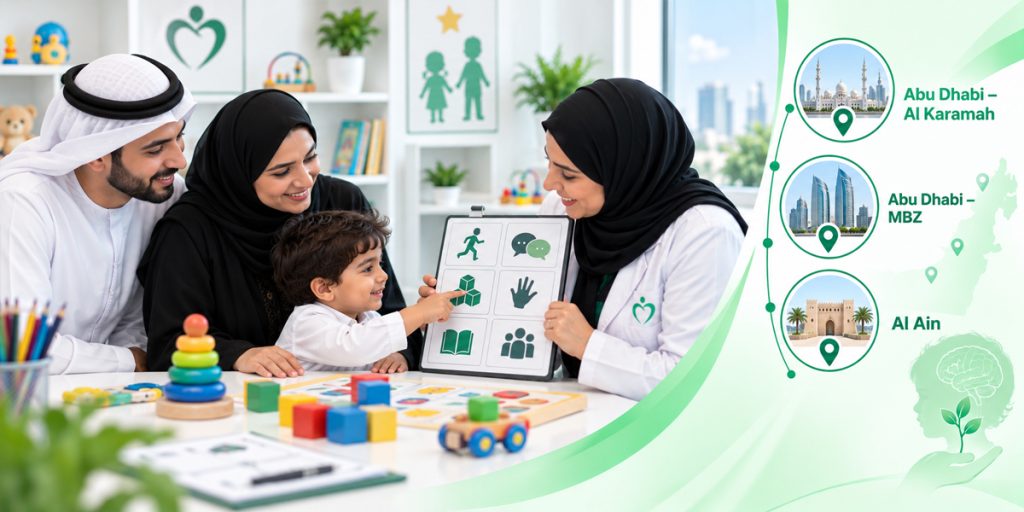
Guidance for Families in Abu Dhabi, and Al Ain
Whether guidance comes during a consultation or as a take-home plan, the same practical support is available across all three locations.
Why Home-Based Stimulation Matters
Not every child needs therapy — but all children benefit from intentional interaction. Home-based stimulation:
- Reinforces skills learned during therapy
- Encourages parent-child bonding
- Builds routines that support learning and self-regulation
- Works well in familiar, low-stress environments
- Can be adapted to each child’s age, ability, and personality
Best of all, it makes parents active participants in their child’s growth — every single day.
What Types of Activities Do We Recommend?
Based on your child’s age and needs, we may suggest:
- Motor activities — crawling games, climbing cushions, stacking blocks
- Speech & language stimulation — naming objects, singing, turn-taking games
- Sensory play — exploring textures, playing with water or sand, swinging
- Cognitive skills — puzzles, matching games, basic problem-solving
- Social interaction — pretend play, “my turn–your turn” activities, joint attention games
These are designed to be simple, screen-free, and doable in daily routines.
How We Support Parents at KidsHeart
We offer guidance during or after developmental consultations, including:
- Review of your child’s current developmental profile
- Explanation of what skills to encourage next
- Demonstration or modeling of specific play activities
- Customized handouts or weekly plans
- Integration with therapy goals if your child is already receiving services
We don’t overwhelm — we empower with ideas that fit your daily life.
Why Choose KidsHeart?
- Advice from Pediatric Neurologists and Developmental Specialists
- Activities tailored to your child’s age and developmental level
- Encouragement, not pressure — we help you do what’s realistic
- Ideal for early intervention or in-between therapy sessions
- Local support in Dubai, Abu Dhabi, and Al Ain

You’re Not Just a Parent — You’re a Partner in Development
Your presence matters more than perfection. We’re here to help you make every day count.
Frequently Asked Questions (FAQs)
Not in all cases. But they’re an essential complement — and for some children, enough by themselves.
That’s okay. Even 10–15 minutes of focused play can help — we work with what’s feasible for your family.
No. Most activities use common household items — creativity matters more than cost.
We help adjust activities to fit your child’s style — and show you how to gently encourage participation.
Yes. Many stimulation activities work well with peers or older siblings involved — and foster social growth too.