
Auditory Processing Disorder Support
Helping Children Better Understand and Interpret Sounds
Some children hear just fine — but still struggle to make sense of what they hear. They might ask for repetition, miss instructions, or seem to “tune out” in noisy environments. This isn’t a hearing problem — it’s how the brain processes sound.
At KidsHeart Medical Center, our Pediatric Speech Therapy Services help children with Auditory Processing Disorder (APD) develop better listening, comprehension, and classroom coping strategies. We focus on practical tools that make everyday communication easier.
Families across Dubai, Abu Dhabi, and Al Ain turn to us for calm, effective support that bridges sound and understanding.
What Is Auditory Processing Disorder?
APD affects how the brain interprets sounds — especially spoken language. Children may hear normally, but struggle to filter, organize, or respond to what they hear.
Signs of APD can include:
- Difficulty following verbal instructions, especially multi-step ones
- Trouble focusing in noisy environments
- Asking “what?” frequently or needing things repeated
- Seeming distracted or forgetful, especially in group settings
- Poor listening comprehension or slow responses
- Confusion between similar-sounding words or sounds
These challenges often appear in school, where listening is a key part of learning.
When Should You Seek Support?
You may want to explore APD support if your child:
- Has normal hearing but shows signs of poor auditory comprehension
- Struggles with listening and following directions at school
- Mixes up words or sounds that are similar
- Performs better with written than spoken instructions
- Gets tired or frustrated in noisy environments
- Has already had hearing and vision checked, with no concerns
An audiologist typically diagnoses APD, but speech therapy plays a key role in management.
What to Expect in Therapy
Our approach to APD support is practical, structured, and child-friendly.
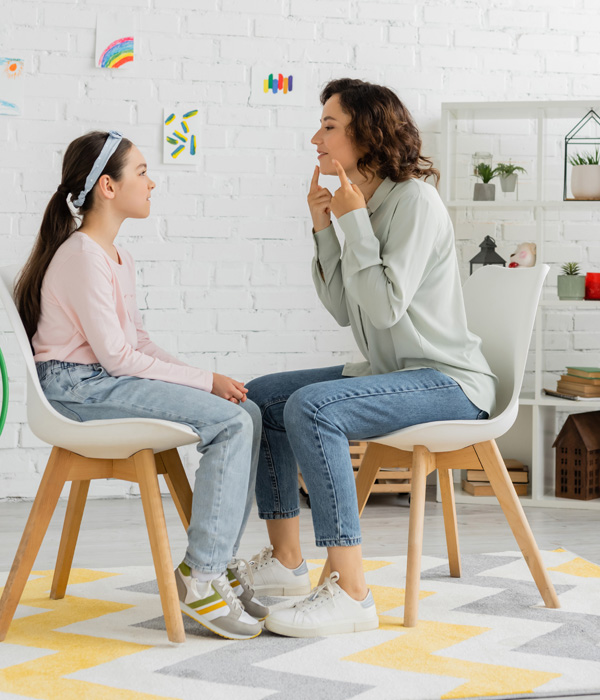
Therapy sessions may include:
- Auditory discrimination and memory training
- Listening games that improve sound-to-meaning connection
- Strategies for following multi-step instructions
- Support for classroom accommodations (visual cues, repetition)
- Environmental modifications and coping tools for noise sensitivity
- Parent education on how to support listening at home
We focus on real-world success — not just test scores.
Why Choose KidsHeart?
- Therapists skilled in auditory processing and language support
- Step-by-step techniques to improve listening in daily life
- Collaboration with audiologists and schools when needed
- Support that blends listening, focus, and memory skills
- Available therapy across Dubai, Abu Dhabi, and Al Ain
We help children hear — and understand — the world around them.

Making Sense of Sound — One Step at a Time
We’re here to help your child listen, focus, and understand more confidently every day.
Frequently Asked Questions (FAQs)
No. Children with APD usually have normal hearing but difficulty processing sounds accurately.
Diagnosis is made by an audiologist, but we provide therapy once APD is identified.
Yes. We teach strategies to improve classroom listening and communication.
They can look similar — but APD is specifically about sound processing. Some children may have both.
Absolutely. We often recommend simple classroom changes to support your child’s listening success.