
You’ve been told your child needs a cardiology check. Maybe it was after a routine pediatric visit, a school screening, or a scan during pregnancy. The doctor was calm, reassuring even, but once you got home and started thinking about it, the words began to echo in your head: ECG. Echo. Holter. MRI.
Suddenly, it feels overwhelming. Your child looks perfectly fine. They’re playing, laughing, asking what’s for dinner. And yet you’re lying awake at night wondering what these tests really mean and whether something serious is being missed.
At KidsHeart, families walk into their first appointment feeling exactly like this. Whether you’re coming to our clinics in Dubai, Abu Dhabi, or Al Ain, the emotional part is often the hardest part. Anxiety does not mean you’re overreacting. It means you care. And usually, what parents wish most is that someone had explained the process in plain language before the first visit.
This is that explanation.
Most Referrals Are About Reassurance, Not Bad News
One of the biggest misconceptions parents have is that being referred to a pediatric cardiologist automatically means something is wrong. In reality, many referrals are made simply to rule things out.
Pediatricians are trained to be careful. A heart murmur, a brief fainting episode, chest pain after exercise, or even a family history of heart conditions may be enough to recommend a specialist review. That doesn’t mean your child has heart disease. It means your doctor wants a clearer picture.
Many families who come through our Pediatric Cardiology service end up leaving with the best news possible: the heart is normal, the murmur is innocent, or the symptoms are not coming from the heart at all. The tests are often done not to confirm a problem, but to confidently say, “Everything is okay.”
Why the Names of the Tests Sound Scarier Than the Tests Themselves
Medical terminology can sound intense, especially when it’s unfamiliar. Parents often imagine needles, pain, or long hospital stays. The reality is usually much simpler and far less stressful for children than expected.
Most first-visit testing in pediatric cardiology is non-invasive and painless. The goal is to gather information gently, without putting your child through anything traumatic.
What an ECG Is Really Like for a Child
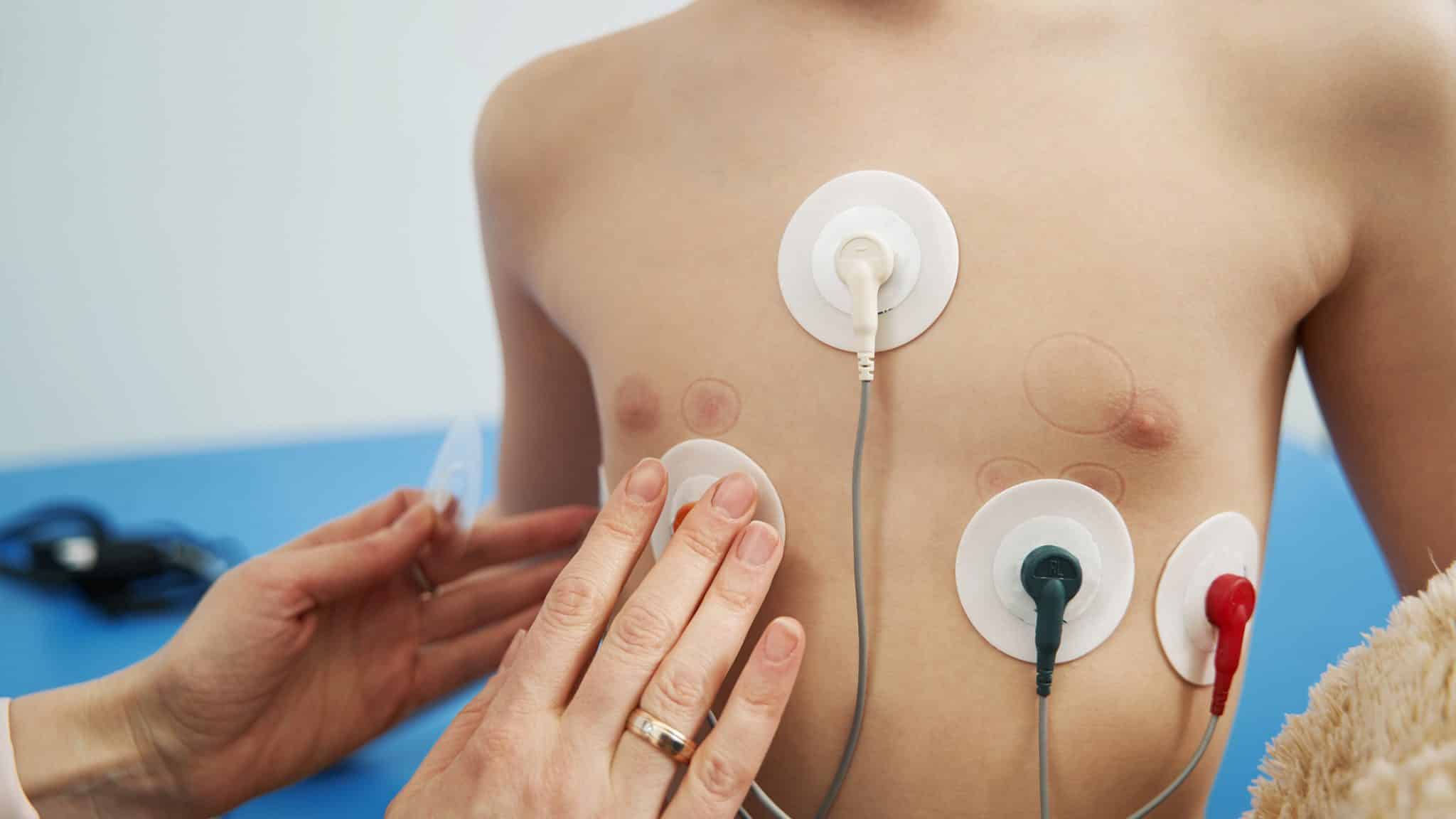
An ECG is often the first test parents encounter, and it’s one of the quickest. During an ECG for children, small stickers are placed on the chest, arms, and legs to record heart rhythm. There are no needles, and no electricity is sent into the body. It’s simply recording what the heart is already doing.
Most children finish the test and look at their parents like, “That’s it?” The hardest part is usually staying still for a few minutes, especially for younger kids who are naturally curious and wriggly.
For cardiologists, the ECG helps identify rhythm patterns, many of which are completely normal for children. For parents, it’s often the moment they realize the “scary test” wasn’t scary at all.
The Echocardiogram Is Just an Ultrasound of the Heart
The word “echo” can sound serious, but a trans-thoracic echocardiogram is very similar to the ultrasound scans many parents have experienced during pregnancy.
Your child lies comfortably while a probe moves gently over the chest with warm gel. It doesn’t hurt. There is no radiation. Many children watch cartoons during the scan, and some even fall asleep if the room is quiet.
This test helps doctors see how the heart is built and how blood moves through it. For murmurs and structural concerns, it’s one of the most reassuring tests we can do, because it gives clear answers.
When Monitoring Is Suggested, It’s Usually for Clarity
Sometimes, symptoms come and go. A child may feel a fluttery heartbeat once every few days, or faint only once, or complain of dizziness that isn’t present during the appointment. In these situations, your cardiologist may recommend ECG Holter and cardiac monitoring.
Parents often worry when they hear “monitoring,” but in practice it’s usually very manageable. The device is lightweight, and your child can go about their normal day.
Here’s what parents are often relieved to learn:
- Your child can typically go to school and follow their usual routine while wearing it
- The purpose is often to capture a symptom that didn’t happen in the clinic
- In many cases, the results come back normal, and that reassurance is exactly what everyone needed
Monitoring is not always a sign that something is wrong. Often it’s a sign that your doctor wants to be thorough and accurate.
Prenatal Tests Can Feel Especially Emotional
If you’re expecting and have been referred for more detailed heart imaging, the emotional load can feel even heavier. A fetal cardiac evaluation or a fetal echocardiography assessment is usually recommended when there’s a family history, a maternal health factor, or a small concern seen on a routine scan.
Parents often walk into these appointments fearing the worst. What many later say is that they wish they had known the goal is information and planning, not panic. Even when an issue is detected, early knowledge allows calm preparation and the right support immediately after birth.
Your Child Takes Emotional Cues From You
This is something parents tell us afterwards, again and again: “I didn’t realize my child was watching my face the whole time.”
Children are incredibly sensitive to how adults around them react. If a parent looks frightened, children often assume something frightening is happening. If a parent stays calm and matter-of-fact, most children follow that emotional lead.
That’s why we encourage parents to use simple, steady language. Instead of “Don’t worry, it won’t hurt” (which can accidentally plant fear), try “The doctor is going to take a picture of your heart to make sure it’s strong.”
Tests Do Not Always Lead to Treatment
One of the biggest hidden fears is that once testing starts, it automatically leads to medication, procedures, or surgery. In reality, many test results lead to reassurance or simple follow-up.
Even when something is identified, pediatric cardiologists focus on what is truly necessary and age-appropriate. For some children, the plan is simply monitoring over time. For others, the plan might involve specific support, such as pediatric arrhythmia management if rhythm symptoms are persistent.
And if a child has already had a procedure or surgery, families are often supported through long-term monitoring with post-surgical cardiac follow-up plans designed around growth and development.
A Gentle Reassurance for Parents
Hearing unfamiliar test names can make any parent’s heart sink. But in pediatric cardiology, these tests are tools for clarity, not causes for panic. Many children who undergo cardiac testing are healthy, and many families leave their first visit feeling far more reassured than when they arrived.
If you’re a parent in Dubai, Abu Dhabi, or Al Ain preparing for your child’s first cardiology visit, know that you’re not alone in feeling anxious. The team at KidsHeart is experienced in caring not only for children’s hearts, but for families navigating uncertainty.
If you’d like to prepare for your child’s visit, you can book an appointment here. If you’re not ready to book but want guidance, you can still reach our team through the same appointment and contact page and we’ll help you take the next step.